
Mold is a type of fungi which thrives well in a humid and poorly ventilated environment, and when it gets inside a building structure, it spreads very fast on the walls, floor, and even through air ducts within just a few days. Mold formation in Maryland is almost a certainty because of high humidity levels in the summer months, plenty of rain, and coastal position of the state near Chesapeake Bay. The people who live in urban centers like Baltimore, Annapolis, and Rockville may not realize that mold could be a problem until it causes some diseases or damage to building structures. Hence, the importance of early detection cannot be understated.
Hiring a mold inspection that Maryland homeowners can rely on is one of the most effective strategies to detect any possible problem early. A mold inspection helps find any moisture pockets and molds hidden from plain sight. The following are ten most clear signs indicating when to schedule a mold inspection as well as places where mold grows most frequently, what a mold inspection entails, and how to prevent mold in your house.
Why Mold Is Common in Maryland Homes
To begin with the symptoms of the fungus infection, it is worth mentioning what makes Maryland properties more vulnerable to mold growth compared to homes located in other climatic zones with less precipitation. In particular, some geographical and meteorological factors create conditions that are favorable for mold proliferation on a consistent basis:
- High levels of humidity: Maryland summers can experience humidity rates of over 60 percent, resulting in increased moisture content indoors and outdoors throughout the long periods of the year.
- Rainfall: The occurrence of storms that predominantly takes place in spring and late summer results in an increased chance of moisture intrusion into the building due to the roof, windows, and cracks in the foundation.
- Floodings: Buildings in lowlands or close to the Chesapeake Bay, Potomac River, and their tributaries have an increased chance of floodings after the rainstorms.
- Poor ventilation: The older buildings with bad circulation will have increased humidity in the building.
- Basements and crawl spaces: Usually basements and crawl spaces have a higher level of dampness, darkness, poor ventilation, and they become a home of molds.
Top 10 Signs You Need a Mold Inspection
Considering those factors, here are the particular signs that indicate the mold presence in your building.
Sign #1: Musty smell
In case you have the musty smell despite the cleaning in your building, this means that there is some mold there. Usually, the musty smell is caused by mold in the walls, floors, and air conditioning system that are difficult to clean.
Sign #2: Visible Mold Stains
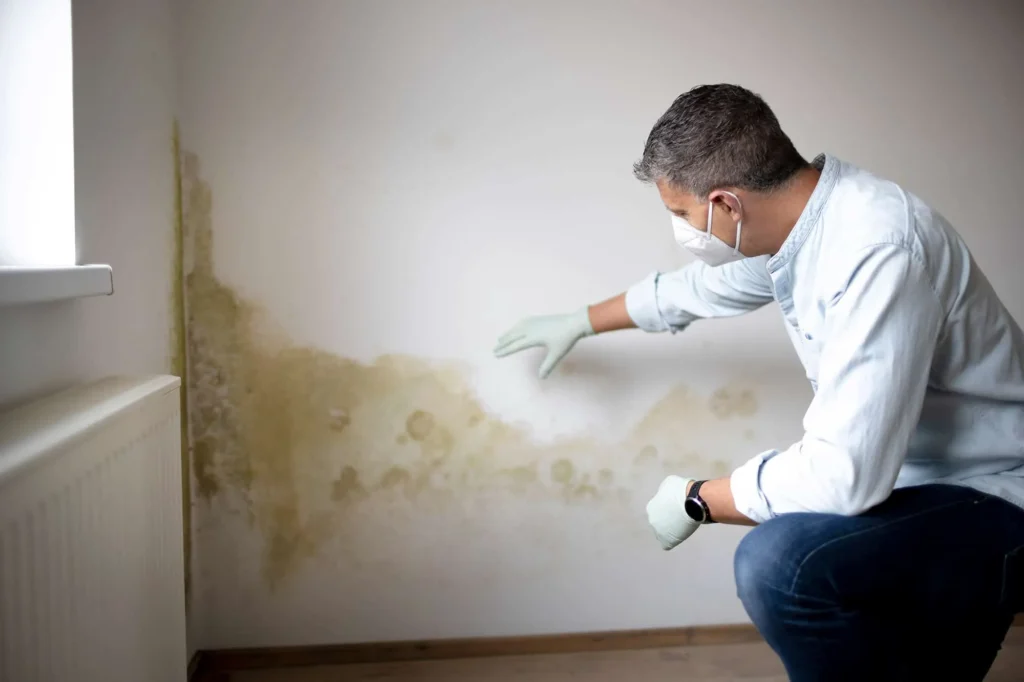
Black, green, white, or brown stains on walls, ceilings, bathroom tiles, or even basement surfaces indicate the presence of mold. Even though it is easier to notice when there is mold visible, it usually means that there is a bigger colony present somewhere else. A visible stain should not be considered just something that needs to be cleaned.
Sign #3: Fresh Water Damage
From roof leaks to pipe leaks, flooding, and water damage, these issues supply mold with the moisture that they need in order to grow. Even once the leak itself has been repaired, any lingering moisture left in the walls, below the flooring, and behind the baseboards could cause mold to grow within a day or two, before the homeowner knows anything is wrong. If a home has been subjected to water damage during the last year, it’s wise to get it checked out.
Sign #4: Allergy Symptoms Present at Home
If you experience symptoms such as sneezing, running nose, itchy eyes, and many other allergy-like symptoms which are common at home but tend to subside when you leave your home, then you may be sure that you have been exposed to mold spores. Mold spores are one of the most common allergens present in the house, and individuals who have existing respiratory illnesses within the family show these symptoms first.
Sign #5: High Humidity Level at Home
Condensation of moisture on windows, the feeling of moisture present in some rooms, or indoor relative humidity levels higher than 30 to 50 percent create an ideal condition for molds to grow. Even without the presence of any visible mold in your home, high humidity levels in your house should be enough reason for you to contact a professional for inspection.
Sign #6: Flaking Paint or Detached Wallpaper
If there’s water accumulating inside the walls, chances are your paint will start to flake off, and your wallpaper will start to detach from its place. This is a typical sign of the possible development of mold inside the walls.
Sign #7: Warped Walls or Flooring
Walls made from drywall, floors that buckle, or soft spots on the floor suggest that there is an ongoing problem of moisture present. There may be mold growing below these warped surfaces, where it cannot be seen. A professional inspection for moisture and mold will help to determine how extensive the damage may be.
Sign #8: Your HVAC System Has a Musty Smell
If your air conditioner or heating system emits a musty odor while operating, mold could be growing inside the duct work. This is because HVAC systems move air through the whole house, meaning that any mold growing in the ducts will disperse spores all over the house.
Sign #9: Mold Problem in the Past
If you have had mold problems in the past that require remediation and the mold comes back, this could mean that there was no proper identification of the cause of the problem. The mold problem could come back if the mold cleaning was incomplete.
Sign #10: Purchase/Sale of Real Property
Performing a mold inspection before purchasing a home ensures that any future problems are known about beforehand to help the buyer sleep soundly at night. An inspection will also be beneficial for sellers, as it allows them to address mold problems and protect the value of their real property.
Areas Where Mold Commonly Grows
| Area | Why Mold Grows Here |
| Basement | Low airflow, high moisture, often below grade |
| Bathroom | Constant humidity from showers and poor ventilation |
| Kitchen | Steam, sink leaks, and appliance condensation |
| Attic | Roof leaks and poor insulation trap moisture |
| Crawl space | Ground moisture and limited air circulation |
| Laundry room | Dryer vent leaks and washer overflow |
| Around windows | Condensation buildup on glass and frames |
| HVAC ducts | Moisture and dust create a breeding ground |
Why You Shouldn’t Ignore Mold
Failure to ignore mold will not make it disappear, and procrastination is likely to make any future fixes costlier. Untreated mold results in a variety of ailments, ranging from breathing problems, allergies, and asthma complications. Mold affects the quality of building material on which it grows by weakening the strength of the walls and floor structures made of drywall, framing, and subflooring. A mold patch that would have cost a couple of hundreds to treat may end up costing a replacement of the entire wall or floor if left unattended.
Apart from causing health complications, mold leads to poor air quality and a generally uncomfortable living environment. In addition, it may bring about problems in terms of property value in case mold problems become apparent during the process of home inspection in preparation for a future sale of the property, which may even prevent a home sale from taking place at all. An indoor mold inspection is therefore less costly than mold remediation or drywall replacement in the long run.
What Happens During a Professional Mold Inspection?
A thorough mold inspection is not a quick and easy task but a process which involves the following:
- Visual inspection – an inspector walks around the house checking the walls, ceilings, floor, attic, basement for the presence of mold, water stains, and leakages in the past.
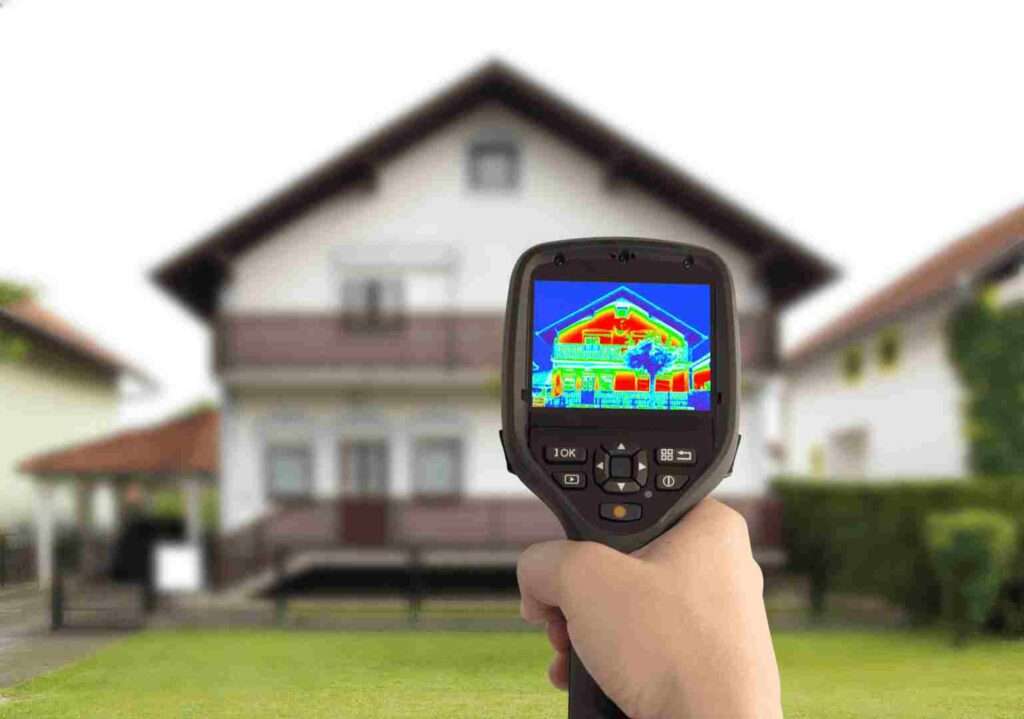
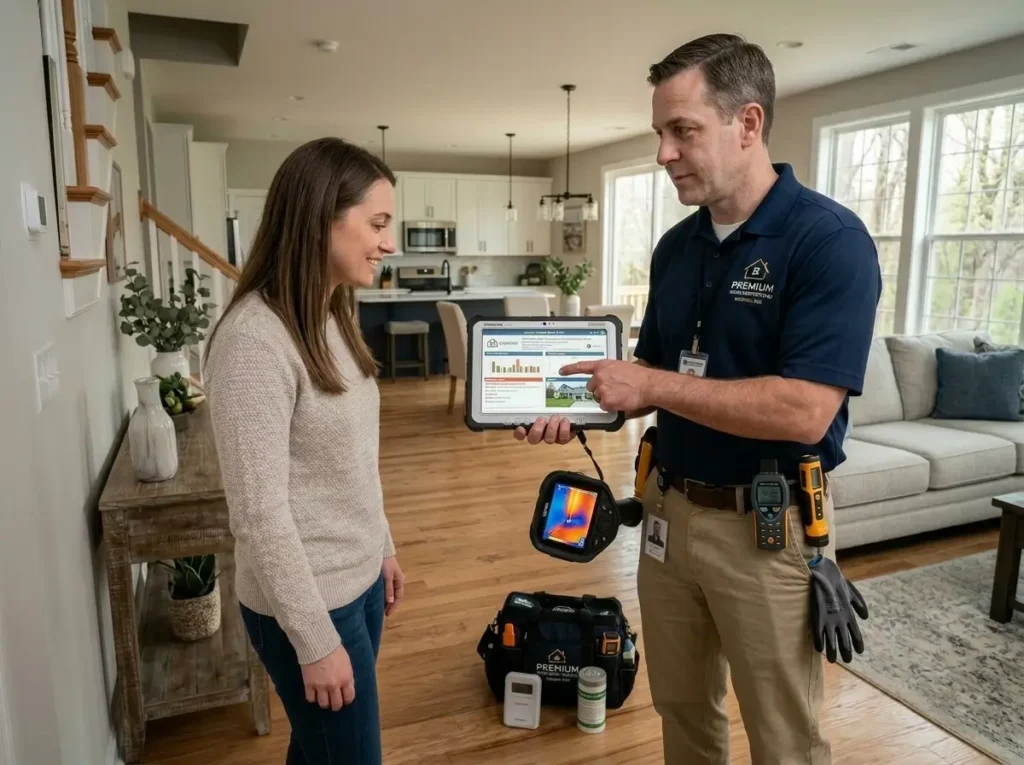
- Dampness detection – special devices such as moisture meters and infrared cameras help to find hidden wet spots behind the walls or under the floorboards that cannot be seen.
- Air quality testing – when needed air samples from several rooms can be analyzed in order to get the information about the amount of mold spores and compare it with the outdoor level.
- Surface sample taking – sometimes swab or tape samples from the suspect area are collected for laboratory analysis to establish the type of mold.
- Written report – the results of the inspection are summarized in a report, describing problem areas, sources of moisture, and types of mold found. It is delivered to the client in a few working days.
- Next steps – the inspector gives recommendations concerning the next steps in mold remediation, prioritizing them by their importance.
When Should You Schedule a Mold Inspection?
| Situation | Why an Inspection Is Recommended |
| After flooding | Standing water and residual moisture create rapid mold growth conditions |
| After plumbing leaks | Hidden leaks behind walls or under floors often go unnoticed |
| Before buying a home | Identifies existing mold issues before closing |
| Before selling a home | Prevents surprises during buyer inspections |
| When symptoms appear | Allergy or respiratory symptoms that improve outside the home |
| After noticing mold signs | Odors, stains, or visible spots warrant a closer look |
Tips to Prevent Mold Growth
- Maintain indoor humidity: Maintain indoor humidity at between 30 and 50 percent using a cheap hygrometer to measure moisture in troublesome rooms.
- Repair leaks in 24-48 hours: Repair any leakages in your pipes, roof, or windows within 24 to 48 hours to avoid the establishment of mold.
- Ventilate properly: Switch on exhaust fans in bathrooms and kitchens while in use and even after to get rid of trapped humidity.
- Install a dehumidifier: Install a separate dehumidifier for basements and crawl spaces, especially during Maryland’s humid spring and summer seasons.
- Clean moisture-prone areas: Clean window sills, bathroom tiles, and refrigerator drip pans at least once a week.
Conclusion
Getting the mold inspected at an early stage helps avoid financial losses for Maryland home owners and ensures that you do not compromise on your family’s health, since in this particular state, mold is almost always a possibility due to the humidity and frequent rainfalls and floods. A lot of symptoms listed above, such as musty odor and mysterious allergy symptoms are often overlooked, and the mold problem gets out of hand by the time one actually realizes something is wrong. Mold inspection by professionals ensures that you get the true picture of what is happening in your house and the appropriate measures that need to be taken.
If you suspect mold in your house based on any of these symptoms, then it is high time you consulted with a professional Maryland mold inspector.
FAQs
How long will the mold inspection take?
The time of a typical mold inspection depends on the size of the house and number of problem spots, but it usually takes from 1 to 3 hours.
Can I do the mold testing myself?
There are many mold testing kits available for sale, however, those tests will only show you visible mold and cannot detect mold growth behind the walls or under the floor.
Is there any homeowners insurance that covers the mold removal cost?
The coverage will depend on your policy and cause of the water leak. A mold that occurs due to an insured event like a pipe bursting is less risky not to be covered than mold caused by the lack of maintenance.
How much will a mold inspection cost me in Maryland?
The price depends on the size of the house and complexity of the test. However, in most cases, mold inspection costs relatively cheap.
Is all mold dangerous?
Different types of mold have different impacts on your health. However, all indoor mold growth requires attention.
What should be the frequency of scheduling the mold inspection?
In most cases in Maryland, having an inspection annually will suffice for most houses, and any other inspection is necessary after flooding, leaks or renovation that affects walls and floors.
What is the distinction between mold testing and mold inspection?
Mold inspection is done through an examination process in which visual and moisture assessments are made of the house, while the mold testing involves gathering samples and taking them to a laboratory.