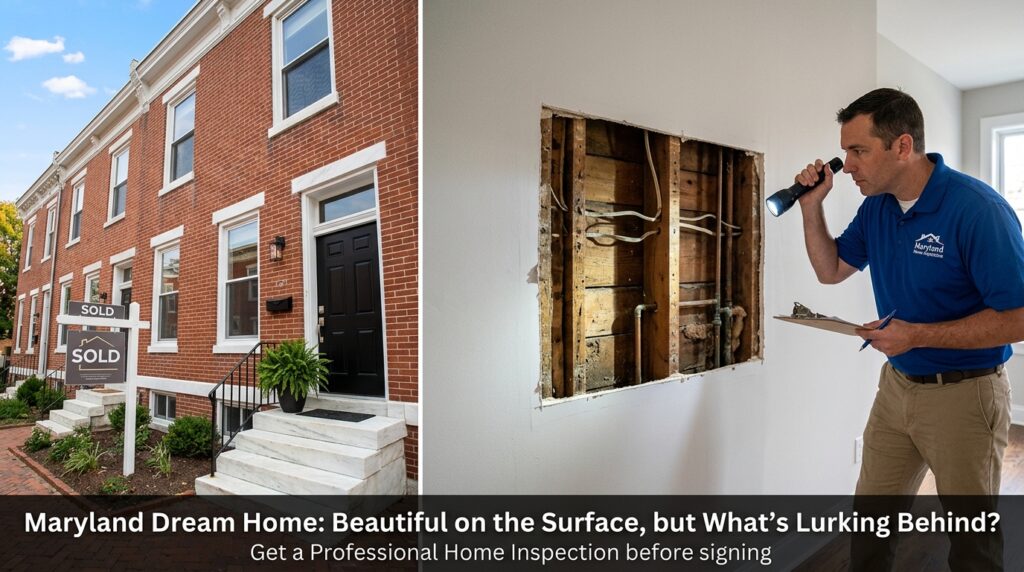
In Maryland, our beautiful landscapes and waterways come with a hidden trade-off: a humid, damp climate that mold absolutely loves. While a standard home inspection gives you a general overview of a property’s condition, it’s not designed to dig deep into microbial threats. A standard inspection checks the plumbing, electrical, and structure; a specialized mold inspection uses the power of science to uncover invisible threats that could cost you thousands and impact your family’s health.
The purpose of this blog is simple: to walk you through why a mold inspection is a non-negotiable step in your home-buying journey here in Maryland. We’ll help you understand the risks, spot the warning signs, and ultimately protect your investment and peace of mind before you sign on the dotted line.
Schedule Your Mold Inspection Today
Don’t let hidden mold damage your home or affect your family’s health. Book a professional mold inspection today and get peace of mind with a thorough, expert assessment.
Book Your Inspection NowWhy Mold Inspections Are Essential Before Buying a Home in Maryland
Relying solely on a standard home inspection is a gamble you don’t want to take. General home inspectors are jacks-of-all-trades; they look for visible structural defects and faulty systems, but they aren’t trained mycologists. They won’t move furniture, peer deep inside ductwork, or sample the air for spores.
This is why mold often goes completely unnoticed. It thrives in the dark, hidden cavities of a house—behind drywall, under flooring, and above ceiling tiles. A seller might not even know it’s there, especially if a previous leak was simply patched and painted over. The financial risk is enormous: uncovering a major mold problem after closing means the remediation bill is entirely yours. More importantly, the health concerns for your family, ranging from chronic allergies and asthma to more severe reactions, are too significant to ignore. A pre-purchase mold inspection is your shield against these hidden dangers.
Why Maryland Homes Are More Vulnerable to Mold
Why are homes in the Old Line State such a prime target? The answer lies in our unique local environment and housing stock. It’s a perfect storm of conditions that create a constant moisture threat.
- Maryland’s humid summers: Our sticky, high-humidity summers create a constant supply of moisture that seeps into homes.
- Heavy rainfall: Seasonal downpours can overwhelm gutters and foundations, leading to seepage.
- Snow melting moisture: Winter’s thaw can saturate the soil around your foundation, forcing water into basements.
- Coastal humidity (Eastern Shore): Persistent coastal dampness significantly raises indoor moisture levels near the Bay.
- Older housing stock: From Baltimore to Frederick, our beautiful historic homes often lack modern vapor barriers and waterproofing.
- Basements and crawl spaces: A staple of Maryland architecture, these below-grade spaces are naturally prone to dampness and poor ventilation.
Hidden Mold Problems Commonly Found in Older Homes
In established Maryland neighborhoods, charm comes with a history. That history can often include decades of hidden moisture, meaning mold can be entrenched in places you’d never think to look.
Behind Drywall
A tiny, slow leak from a pipe inside a wall can go undetected for years, turning the interior side of your drywall into a massive, hidden mold colony.
Under Flooring
That slightly warped hardwood floor near the kitchen sink or bathroom? It’s often a sign that the subfloor underneath is a breeding ground for mold from past spills or leaks.
Attics
Poor ventilation or a small roof leak can trap humid air in the attic. Mold quietly grows on the underside of the roof sheathing, often invisible without climbing up and looking.
Crawl Spaces
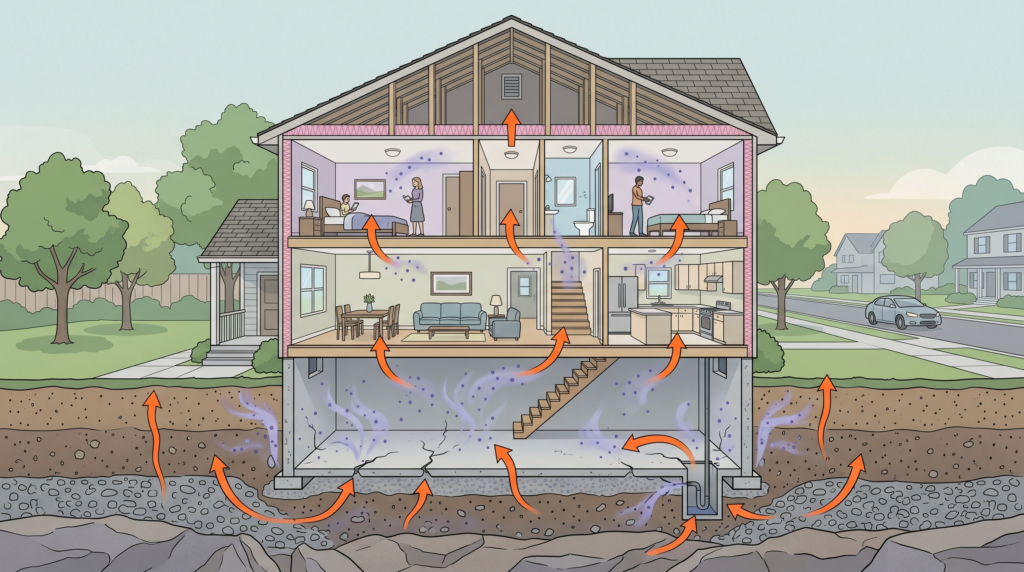
A classic problem area. A damp, dirt-floor crawl space with no encapsulation sends musty, mold-saturated air directly up into your living spaces through the stack effect.
Basements
Efflorescence on concrete walls might look harmless, but it signals water intrusion. Combine that with stored cardboard boxes and you have a mold buffet.
HVAC Systems
Dark, cool, and collecting dust, air ducts and condensate drain pans are perfect incubators. When the system kicks on, it blows mold spores throughout the entire house.
Around Plumbing
Slow, persistent drips under sinks, behind toilets, or from a water heater connection keep the wall or cabinet cavity perpetually wet, fostering mold growth long before it’s visible.
Previous Water Damage Can Leave Hidden Mold Behind
Water is mold’s catalyst. What starts as a one-time event can leave a lasting, toxic legacy. Even if the damage looks repaired, the biological contamination may remain.
- Roof leaks: Water tracks down from a damaged shingle, soaking attic insulation and ceiling drywall before any drip is seen inside.
- Basement flooding: A flooded basement after a heavy Maryland storm leaves moisture wicking up drywall and saturating carpet padding for days.
- Pipe leaks: A pinhole leak inside a wall cavity creates a continuous, unseen source of moisture.
- Window leaks: Poorly sealed windows allow rain to enter the wall framing, rotting the wood and nurturing mold within the sill cavity.
- Foundation cracks: Even hairline cracks can transmit ground moisture into a finished basement wall.
- Appliance leaks: A slow dishwasher or washing machine leak under the flooring is a classic culprit.
- Storm damage: Driven rain from a tropical storm or nor’easter can breach siding and flashings.
Here’s the most critical fact: mold can begin growing within 24 to 48 hours after water exposure. The clock starts the moment materials get wet, making a thorough post-water-damage inspection essential.
Signs Buyers Should Never Ignore During a Home Tour
Your senses are your first line of defense. As you walk through a potential home, keep your radar up for these red flags. Don’t fall for the idea that a “musty basement” is just an old-house smell.
- Musty smell: This is the outgassing of microbial growth. A persistent, earthy odor is often the only sign of a massive hidden problem.
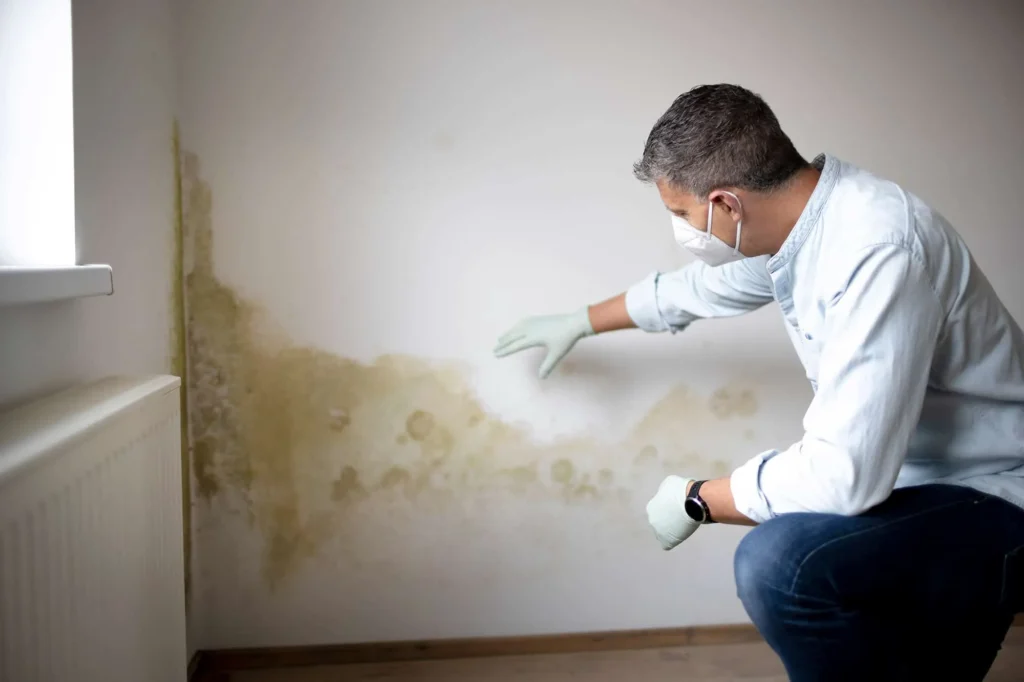
- Water stains: Look for telltale rings or yellowish-brown patches on ceilings, walls, and around baseboards.
- Peeling paint: If paint is bubbling or peeling, especially on a bathroom ceiling or exterior wall, moisture is pushing it off the substrate.
- Warped flooring: Cupping, buckling, or raised floorboards point to past or present moisture saturation from below.
- Condensation: Heavy fogging or water droplets on the inside of old windows suggest dangerously high indoor humidity.
- High indoor humidity: If the air feels heavy and clammy, the home’s vapor barrier or ventilation might be failing.
- Black spots: Look closely at caulking around tubs, sinks, and window frames. Any speckled black or dark green growth is active mold.
- Recent paint covering stains: Be suspicious of a single, freshly painted patch on a ceiling or wall. It could be an attempt to cosmetically hide a water stain.
What Happens During a Pre-Purchase Mold Inspection
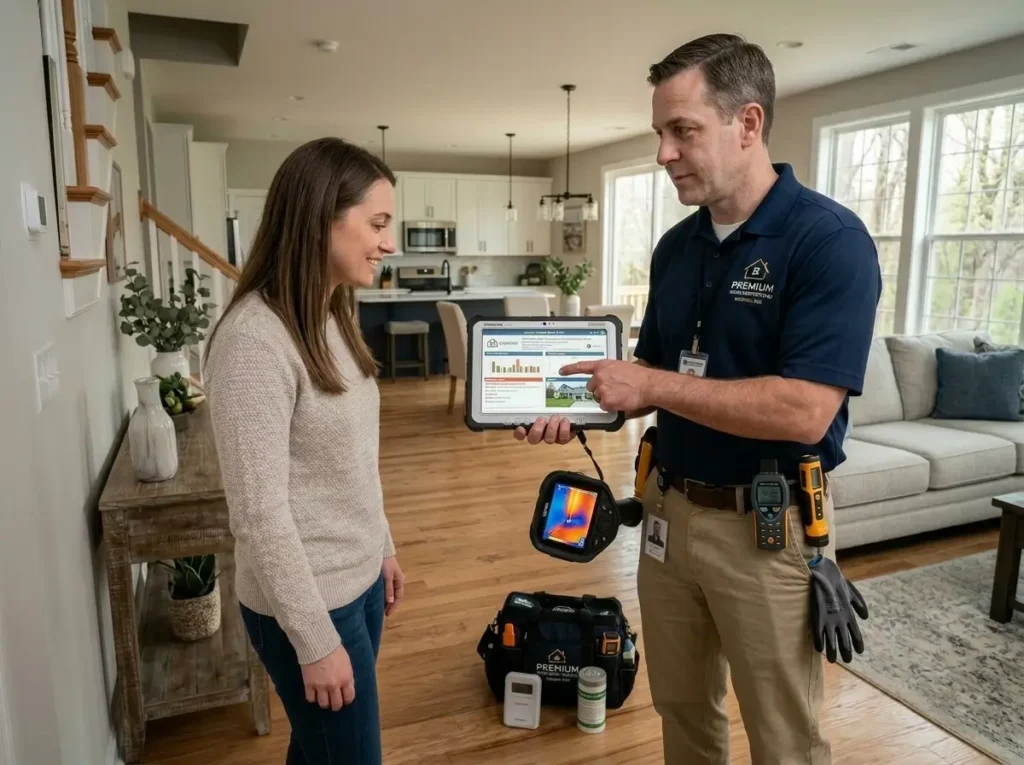
A professional mold inspection is a systematic, scientific process that goes far beyond a quick look-around. Understanding the steps can help you feel confident in the findings.
- Visual inspection: A meticulous, top-to-bottom physical exam, looking for visible growth, water damage, and risk areas.
- Moisture meter: A probe is used to test walls, floors, and ceilings for hidden moisture content without causing damage.
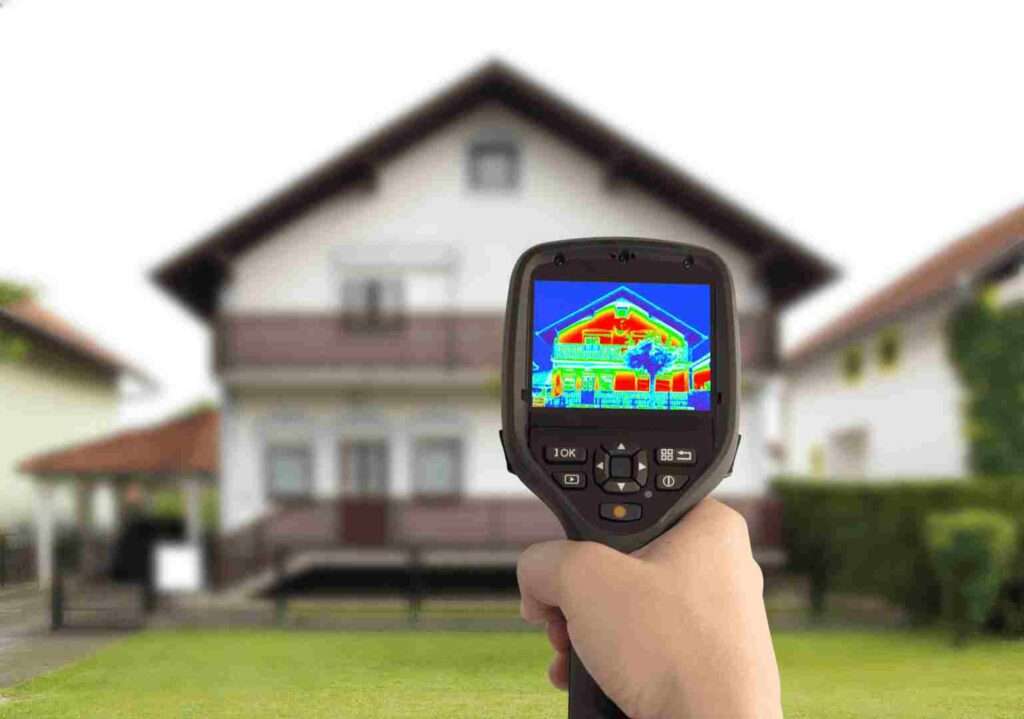
- Thermal imaging: An infrared camera detects temperature differences in walls, revealing the cold, damp signatures of hidden leaks and moisture pockets.
- Humidity testing: A hygrometer measures the relative humidity in each room to assess conditions that support mold growth.
- Air sampling: A specialized cassette captures airborne mold spores from a measured volume of indoor air, which is compared to an outdoor baseline sample.
- Surface sampling: If visible suspect growth is found, a tape-lift or swab sample is taken to identify the specific species and spore count under a microscope.
- Laboratory testing: All samples are sent to an independent lab for analysis, confirming the types and concentrations of mold present.
- Written report: You receive a plain-English, detailed report outlining findings, lab data, and clear remediation recommendations.
What’s the Difference Between a Home Inspection and a Mold Inspection?
This is one of the most common questions buyers ask, and the distinction is crucial. They are not interchangeable; they are complementary services.
| Feature | Standard Home Inspection | Specialized Mold Inspection |
|---|---|---|
| Purpose | Evaluates the physical structure and mechanical systems for general condition and safety. | Assesses the entire indoor environment solely for signs of moisture intrusion and microbial growth. |
| Moisture Detection | Spot-checks for obvious moisture with a simple probe or visual clues. | Systematic, comprehensive moisture mapping of floors, walls, and ceilings throughout the home. |
| Mold Identification | Notes only visible, suspect growth and recommends further evaluation. | Visually identifies growth, takes physical samples, and sends them for lab analysis to confirm species. |
| Air Testing | Never included. | A core component, using spore traps to capture and quantify invisible airborne contaminants. |
| Thermal Imaging | May be used casually, if at all, to spot major insulation gaps. | Used diagnostically to precisely map thermal anomalies that indicate hidden moisture behind surfaces. |
| Lab Testing | Not conducted. | Standard practice; samples are analyzed by an independent microbiology lab to determine spore types and toxicity. |
| Recommendations | Advises on repairs or replacements of roof, HVAC, plumbing, and electrical components. | Provides a specific scope of work for professional mold remediation and moisture correction strategies. |
How Mold Inspections Protect Home Buyers
Knowledge is leverage and protection. Getting a mold inspection isn’t about finding a problem; it’s about gaining control over the transaction and your future.
- Prevent unexpected repairs: Knowing the extent of an issue before closing eliminates shocking, budget-busting remediation surprises later.
- Better price negotiation: A documented mold problem is a powerful tool to renegotiate the sale price or ask for a significant credit.
- Seller repairs: You can make the sale contingent on the seller paying for professional mold remediation by a licensed contractor.
- Peace of mind: An “all-clear” report lets you move into your new home knowing the air you’re breathing is safe and clean.
- Better investment decisions: If a problem is too extensive or the seller refuses to budge, the inspection gives you the data you need to confidently walk away.
- Avoid legal disputes later: Uncovering mold post-sale often leads to complex, costly litigation to prove the seller had prior knowledge. A pre-purchase inspection avoids this.
Long-Term Cost Savings of Early Mold Detection
Spending a few hundred dollars on an inspection can save you tens of thousands. Ignoring a small, hidden moisture issue allows it to compound into a catastrophic structural and financial burden. Let’s compare the immediate cost of wisdom against the long-term cost of avoidance.
The potential cost of ignoring mold:
- Mold remediation: Professional removal of extensive growth can easily cost between $2,000 and $10,000+.
- Drywall replacement: Contaminated drywall must be cut out, replaced, taped, sanded, and painted.
- Flooring replacement: Soaked subfloors and finished hardwood, carpet, or tile often require a complete tear-out.
- Structural damage: Long-term moisture rots sill plates, joists, and studs—this is a major reconstruction project.
- HVAC cleaning: A mold-contaminated air system requires professional duct cleaning and coil treatment, costing thousands.
- Reduced property value: A known mold history is a stigma that can tank your home’s resale value.
Now, compare this to the modest cost of a pre-purchase mold inspection. The inspection isn’t an expense; it’s an insurance policy that pays for itself the moment it finds a problem—or the moment it guarantees you don’t have one.
Who Should Always Get Mold Testing Before Buying a House?
While it’s a wise choice for anyone, for certain buyers and property types in Maryland, a mold inspection should be considered mandatory.
- First-time buyers: You may not yet have the experience to spot the subtle signs of water damage and cover-ups.
- Older homes: A beautiful 1920s home is full of character, but also decades of opportunities for leaks and unchecked moisture.
- Foreclosures: Vacant, neglected homes often have no climate control, creating a hothouse for unchecked mold from undetected leaks.
- Homes vacant for months: A closed-up house with no air conditioning running through a Maryland summer is a massive red flag for humidity buildup.
- Homes with basements: Below-grade spaces are ground zero for moisture intrusion and are non-negotiable for testing.
- Homes near water: Proximity to the Chesapeake Bay, rivers, or even a creek increases ambient moisture and flood risk exponentially.
- Homes with previous flooding: If a property has any disclosure of past flooding, assume mold is a possibility until proven otherwise.
When Should You Schedule a Mold Inspection?
Timing is everything in a real estate transaction. To make this inspection a powerful tool in your negotiation arsenal, you need to slot it in at the right moment.
- During the inspection contingency: This is the ideal time. Bundle it with your general home inspection to get all your data at once, providing the basis for your repair request.
- Before final negotiations: Have the results in hand so you can present the written report and lab data as factual evidence when asking the seller for a credit or repairs.
- Before waiving inspection rights: In a competitive market, some buyers are tempted to waive contingencies. Doing so without a mold inspection first is a massive financial risk. Get the inspection before you consider waiving anything.
Frequently Asked Questions
Absolutely. It’s a small investment that uncovers the true condition of the home, saving you from potentially devastating remediation costs and health issues after you own the property.
No. A home inspection is a visual overview of a home’s systems. A mold inspection is a specific, scientific environmental assessment using tools like moisture meters, thermal cameras, and lab-tested air samples.
The cost varies based on home size and scope, but you can generally expect a thorough inspection with air sampling to average between $300 and $600—a small price for the protection it provides.
The physical inspection takes a few hours. Laboratory results from air and surface samples typically take 2 to 3 business days to return, after which you’ll get your full report.
Yes, and you absolutely should. You can request that the seller pay for professional remediation, offer a credit at closing, or reduce the sale price to cover the repair costs.
Not always. Most mold issues are correctable. The decision depends on the severity, the cost, and the seller’s willingness to cooperate. The inspection report gives you the data to make that call rationally, not emotionally.
Given Maryland’s climate, it’s a wise investment for any buyer. It provides peace of mind that your new home is a safe sanctuary, protecting both your family’s health and your financial future.
Final Thoughts
Buying a home is one of the biggest investments you’ll ever make. Protecting it should be your top priority. A professional mold inspection for home buyers in Maryland isn’t about finding reasons to walk away—it’s about moving forward with confidence. It’s the key to preventing surprise repairs, making informed negotiations, and safeguarding the health of everyone who walks through the door.
Don’t let a hidden issue turn your dream home into a costly nightmare. Schedule your mold inspection today, and secure the peace of mind and protection that your investment truly deserves.