So you’re buying a home and there’s one question you keep coming back to: how much is this inspection going to cost? Most people land somewhere between 300 and 500 dollars. That covers an inspector spending a few hours going through the house and handing you a report at the end that spells out what’s going on with the place.
We get asked about this pricing constantly at Alhumd Inspection, so here’s the breakdown, no fluff, just what you’ll actually pay and why it moves around.
Know the True Condition of Your Home Before You Buy
A professional home inspection can help you avoid unexpected repair costs and make informed decisions with confidence. Schedule your inspection with Alhumd Inspection and receive a detailed, easy-to-understand report you can rely on.
What Does a Home Inspection Cost on Average?
The average sits around 343 dollars, based on the most recent nationwide pricing data. Most people pay somewhere in the 296 to 424 dollar range. It runs a bit higher in bigger cities, a bit lower in smaller towns, that part isn’t surprising. Assuming your house measures 2,000 square feet, which is common, allocate around 350 dollars.
Prices are set one of two ways. Some inspectors set a flat fee up to a certain size, then add a bit more per extra 500 square feet. Others charge by square footage directly, usually 10 to 30 cents per square foot. At Alhumd Inspection we follow that same structure, so you’re not left guessing. Either way, you’re paying for the same thing: a full walkthrough and a report you keep.
Average Cost by Home Size
| Home Size (sq ft) | Estimated Cost |
| Under 1,000 | $200 – $250 |
| 1,000 – 2,000 | $300 – $350 |
| 2,000 – 3,000 | $350 – $450 |
| 3,000 – 4,000 | $450 – $550 |
| 4,000+ | $550 – $700+ |
What’s Actually Happening During Those Few Hours
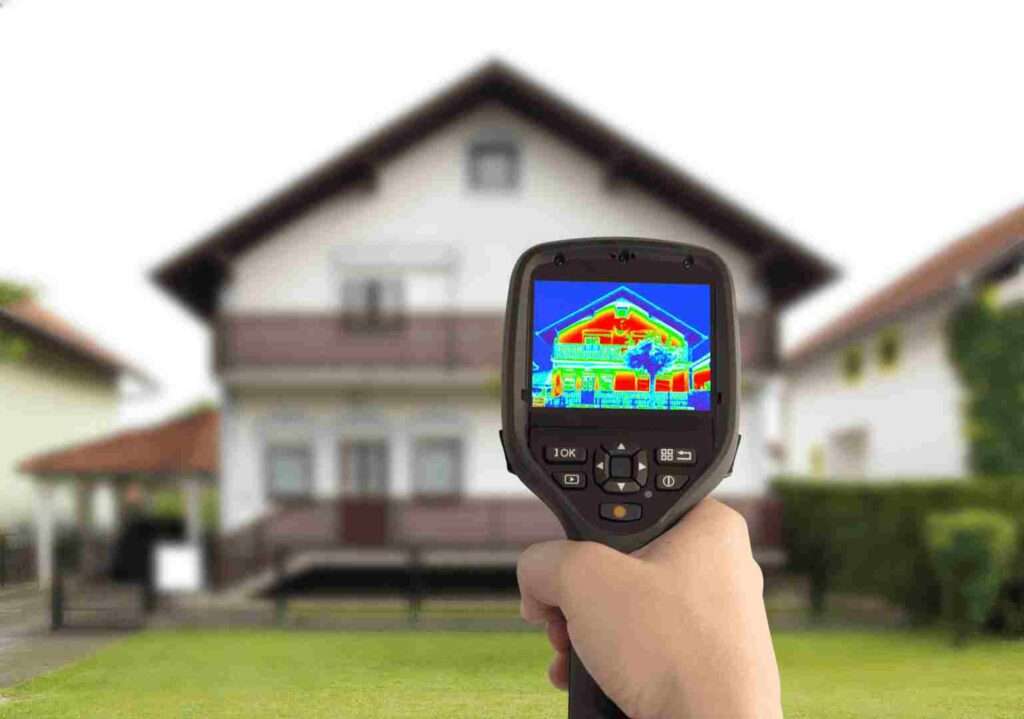
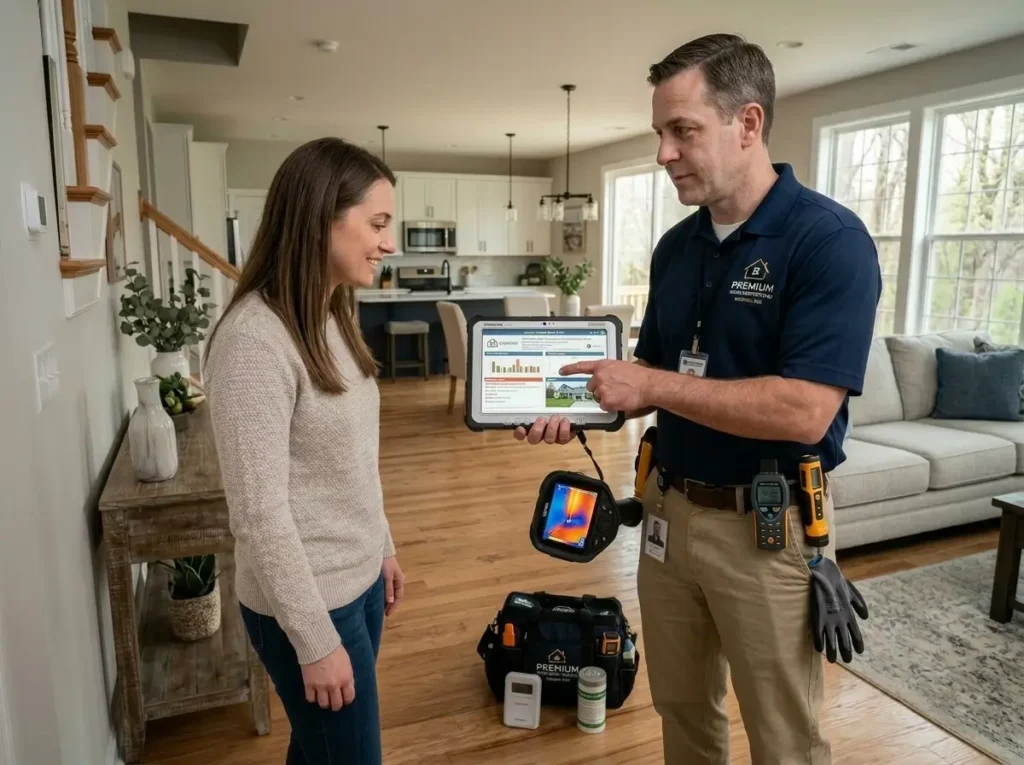
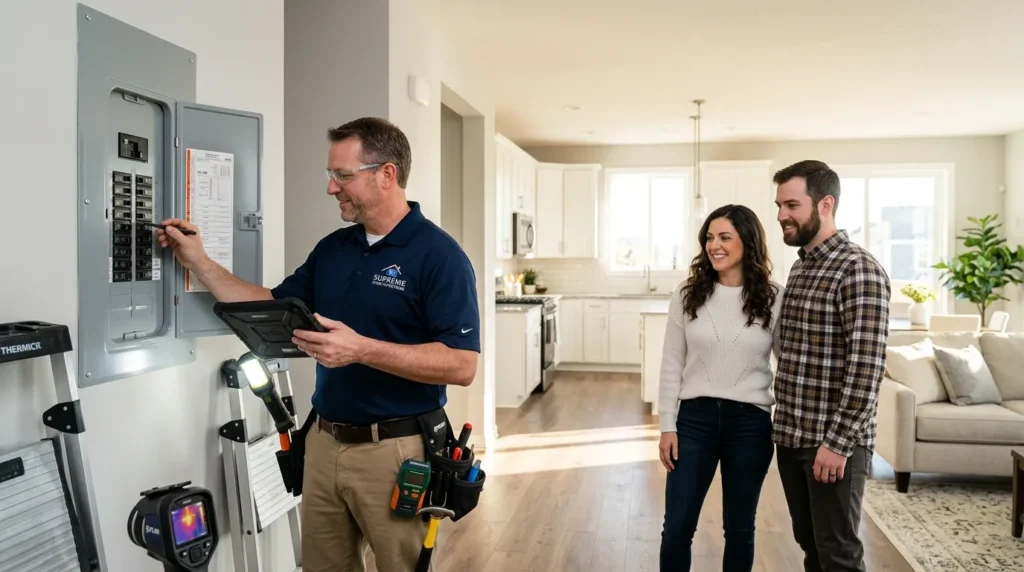
It helps to know what you’re paying for beyond a walkthrough. A licensed inspector working to a recognized standard of practice, the same framework groups like ASHI and InterNACHI train their members on, moves through the home systematically: roof and attic, foundation, electrical panel and wiring, plumbing, HVAC, and every major appliance that stays with the house. Most carry a thermal imaging camera for moisture behind walls or heat loss around windows, plus a moisture meter for anything that looks or smells off. None of that shows up as a separate charge, it’s baked into the base fee.
This is the reason why the report is also more significant than the actual inspection. A good report does not merely state whether the electrical system passed or failed but it details the problem, its location, and the severity of the problem. Alhumd Inspection builds every report to that standard, because a vague checklist doesn’t protect you the way a documented one does.
What Makes the Price Go Up or Down?
A handful of things push you toward the low end or the high end here.
Size matters most. A bigger home takes longer to get through, and time is what you’re paying for.
Age plays a role too. Older properties need a closer look at electrical systems, plumbing, and materials like lead paint.
Location matters too, mostly due to differences in labor rates.
Then there’s whatever you add on. Radon testing, termite checks, sewer scopes, these are usually priced on top, not folded in.
A detached garage, shed, or guest house on the property adds a small charge too, since it gets checked separately.
Common Add-On Inspection Costs
| Add-On Service | Typical Cost |
| Radon Testing | $100 – $200 |
| Termite or Pest Check | $75 – $150 |
| Sewer Scope | $125 – $300 |
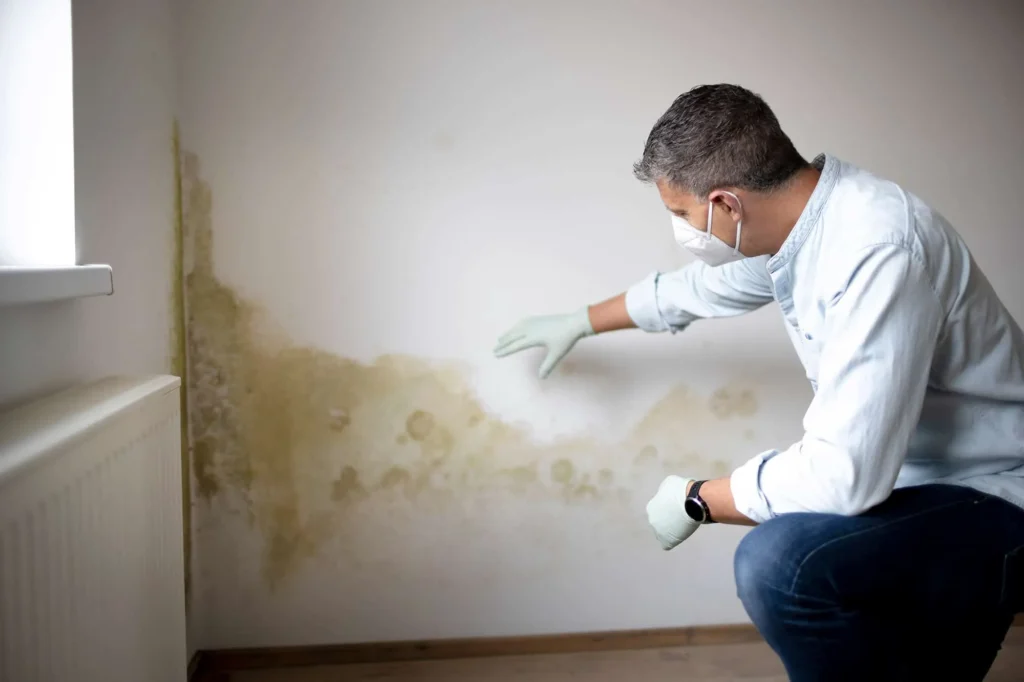
| Mold Testing | $150 – $400 |
| Pre-Drywall Check (new builds) | $100 – $400 |
Does Where You Live Change What You Pay?
The cost is much higher than many customers think. Houses on the coast and in large cities cost between 450 and 650 dollars or even more, whereas the identical one in the Midwest and Southern areas usually goes for around 300 to 450 dollars. It all depends not on the quality of the service, but on licenses and labor rates.
Property type shifts the number too. A condo or small unit between 500 and 1,000 square feet usually falls at the low end, often 200 to 250 dollars, since there’s less square footage and no roof or foundation to climb around. Mobile homes are priced lower for the same reason. Waterfront properties, historic homes, and anything with a well or septic system usually cost more, since those need their own look.
Fees That Sometimes Show Up After the Quote
A few charges don’t always make it into the first number an inspector gives you, so ask about these before you book.
If the house sits outside the inspector’s standard service area, expect an added travel charge of 50 to 100 dollars. Want the report the same day instead of next-day? Rush service typically adds another 50 to 100 dollars.
If you’re insuring a home more than 30 years old, your insurer may require a 4-point inspection, covering just the roof, electrical, plumbing, and HVAC. That runs separately, usually 50 to 100 dollars, purely to satisfy the insurer’s checklist.
It’s also worth finding out if the re-inspection process, involving a return visit to check that the repairs have been carried out, comes at an extra cost. Different companies have different policies, so make sure you clarify this beforehand.
Is It Worth Paying For?
Yes, virtually always. Two hundred dollars is far better spent than several thousand dollars in repair costs later down the road. 86 percent of inspections reveal issues that require fixing, and savvy buyers get about 14,000 dollars on average by using the findings as a bargaining chip in their negotiations.
Would you sign a one-year lease without viewing the apartment? So why would you buy a house, your most expensive purchase, without inspection?
A solid report gives you something concrete for the negotiating table, instead of a gut feeling that everything seemed fine.
That’s the whole reason Alhumd Inspection treats every inspection like it actually matters, because it does. First home or fifth home, having a real report in hand means you’re making the call, not just hoping it works out.
Getting the Most Out of What You Pay
A little research before scheduling saves you unnecessary expenses later.
Ask for an itemized estimate instead of a lump sum, so you know what the final bill includes.
If you already know you’ll want radon testing, a sewer scope, or a mold check, ask about bundling those with the main visit. Inspectors tend to discount combined services rather than charge the full rate.
Timing matters too. Spring and summer are the busiest months, so inspectors stay booked and prices sit higher. A slower stretch works in your favor.
And while comparing quotes is smart, the cheapest option isn’t the best. A rushed inspection that misses something costs far more than what you’d save. You’re shopping for thoroughness, not a number.
Frequently Asked Questions
The buyer, almost always. It’s done on their behalf before closing.
You could, but it’s risky. You might end up covering repairs you never saw coming.
Two to four hours, depending on size and condition.
Yes. New construction can still have mistakes baked in.
A full walkthrough of the main systems, roof, foundation, electrical, plumbing, HVAC, plus a written report.
A narrower check some insurers require for older homes, covering just the roof, electrical, plumbing, and HVAC. It’s not a substitute for a full inspection.
Get Peace of Mind Before You Buy Your Home
Don’t let hidden issues become expensive surprises. Alhumd Inspection provides comprehensive home inspections with clear, detailed reports to help you buy with confidence and negotiate smarter.
The Bottom Line
A home inspection runs a few hundred dollars, but what it buys is hard to put a price on: knowing what you’re walking into before you sign anything. Don’t treat it like a step you can skip to save cash. Treat it like the one part of this process that protects everything else you’re about to put on the line.