You’ve found the house. The offer is accepted. Now your agent says you need a home inspection, and suddenly you have a dozen questions nobody gave you straight answers to. What does the inspector actually check? How long does it take? Do you have to be there? What happens if they find something serious?
Home inspection in Maryland carries specific requirements, local regulations, and regional risk factors — radon levels, older housing stock in Baltimore, lead paint in pre-1978 homes — that make generic guides only partially useful. These 13 questions cover what Maryland buyers, sellers, and property owners actually need to know in 2026, with direct answers and no filler.
1. What Does a Home Inspection in Maryland Actually Cover?
A Maryland home inspection covers the visible and accessible systems and components of a property at the time of inspection. It is not a hidden-defects guarantee and not a code compliance inspection. What it is, is a professional evaluation of condition.
A licensed inspector working under Maryland Home Inspector Law will examine:
- Structural components — foundation, framing, load-bearing walls
- Roofing — materials, condition, drainage, flashing, gutters, downspouts
- Exterior — siding, windows, doors, grading, walkways, decks
- Electrical system — service panel, wiring types, outlets, safety devices
- Plumbing — supply lines, drain lines, fixtures, water heater
- HVAC systems — heating and cooling equipment, ductwork, filters
- Interior — walls, ceilings, floors, stairs, railings
- Attic and insulation — ventilation, insulation type and coverage
- Crawl space and basement — moisture, structural, drainage, sump pump
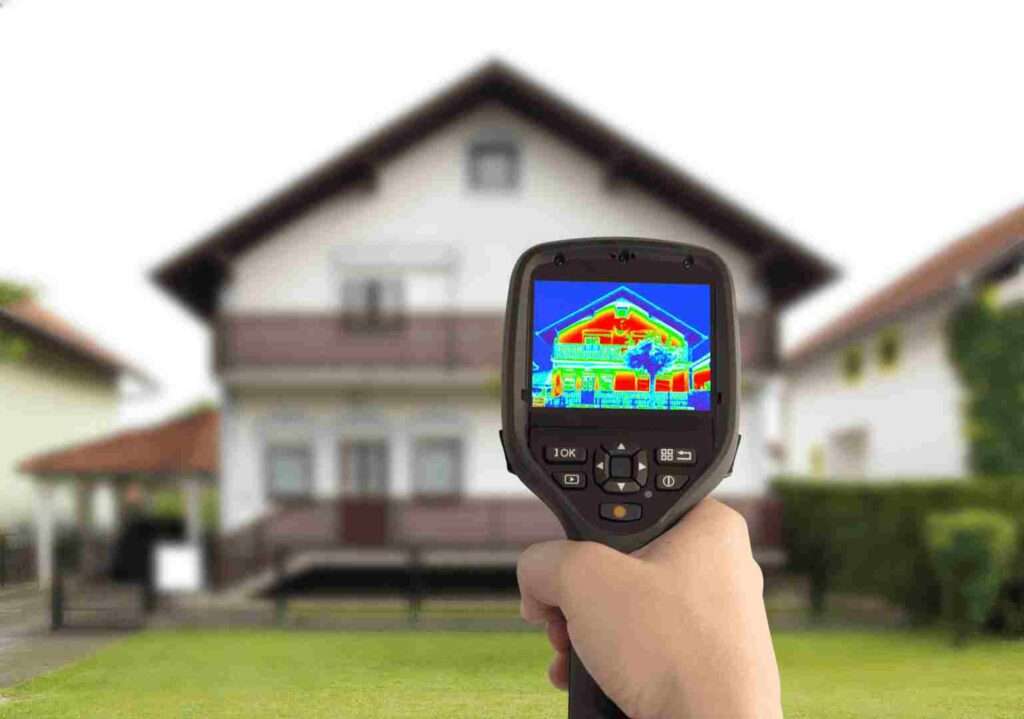
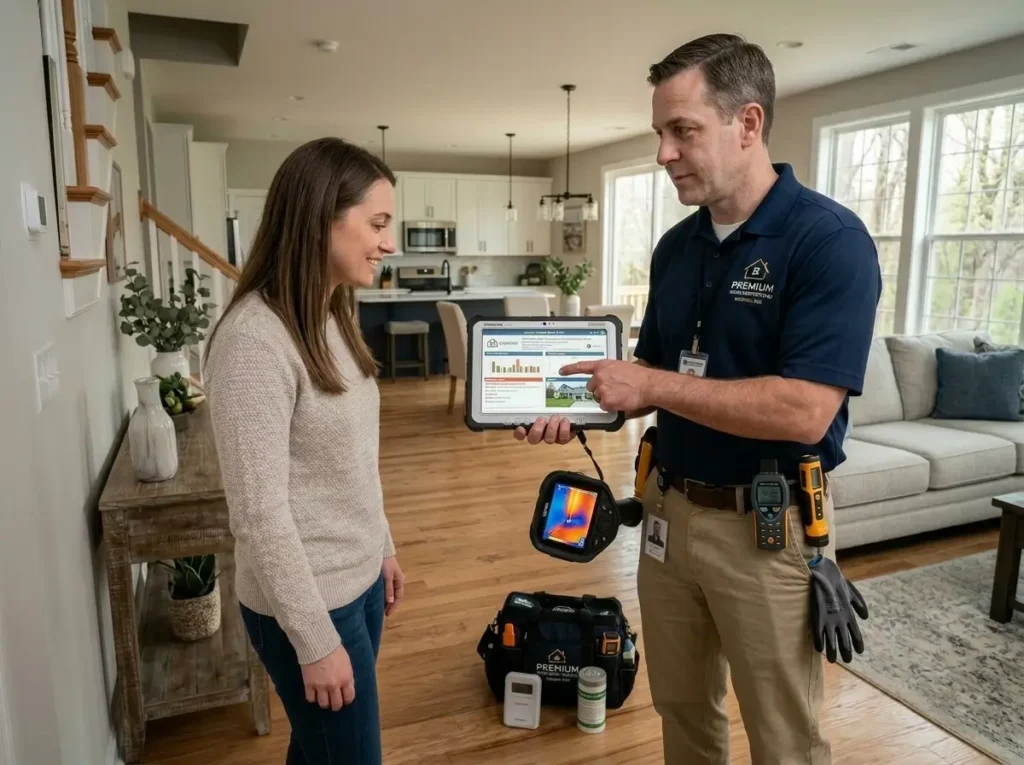
At Alhumd Inspections, every standard inspection also includes thermal imaging to identify moisture intrusion, energy loss, and electrical anomalies not visible to the naked eye. Drone inspection of the roof is standard too, which gives buyers a level of detail on roofing condition that a ladder-only walkup simply cannot match.
What the inspection does not cover by default: radon, mold, termites, lead paint, sewer scope, and pool condition. These are separate services, and Maryland’s housing stock — particularly older homes in Baltimore City, Ellicott City, Silver Spring, and Frederick — often warrants at least radon testing and mold inspection alongside the standard inspection.
2. Is a Home Inspection Required in Maryland?
A home inspection is not legally required by Maryland law for a real estate transaction. However, practically speaking, skipping it is one of the most expensive decisions a buyer can make.
Maryland mortgage lenders do not mandate a home inspection, but they do require an appraisal. These are not the same thing. An appraisal tells the bank what the property is worth. An inspection tells you what condition it’s actually in. Both are necessary, and they serve different people’s interests.
For buyers in competitive Maryland markets like Montgomery County, Howard County, and Anne Arundel County, some have considered waiving inspections to strengthen offers. The MRIS market data from Q1 2026 shows this practice has decreased significantly from the 2021 to 2022 peak, as buyers have become more risk-aware after high-profile post-purchase defect discoveries. Most experienced Maryland real estate attorneys now advise strongly against inspection waivers for any but the most distressed-price properties.
3. Who Can Legally Perform a Home Inspection in Maryland?
Maryland is one of the more strictly regulated states for home inspector licensing. Under Maryland Business Occupations and Professions Code, Title 16, home inspectors must be licensed by the Maryland Department of Labor.
To become licensed in Maryland, an inspector must complete a minimum 72-hour home inspection course, pass the National Home Inspector Examination (NHIE), carry minimum liability and errors and omissions insurance, and complete continuing education annually to maintain the license.
This matters for buyers because unlicensed inspectors do operate in gray areas of the market. Always verify a Maryland home inspector’s license at the Maryland Department of Labor’s license lookup portal before booking. Ahmed at Alhumd Inspections is a licensed Maryland home inspector with over 2,000 completed inspections across Baltimore, Columbia, Ellicott City, Frederick, Germantown, Silver Spring, Annapolis, Rockville, Gaithersburg, Bowie, Towson, Hagerstown, and Salisbury.
4. How Much Does a Home Inspection Cost in Maryland in 2026?
Home inspection pricing in Maryland ranges based on property size, age, location, and services included. Standard single-family home inspections start at $395 with Alhumd Inspections. Verify current pricing at alhumdinspections.com, as rates may be updated.
For context, the American Society of Home Inspectors (ASHI) 2025 national survey placed the average home inspection cost between $350 and $500 for a standard residential inspection. Maryland pricing sits within this range, with urban areas like Montgomery County and Howard County tending toward the higher end due to larger home sizes.
Where buyers often miscalculate is by treating the inspection as a standalone cost. If you add radon testing, mold inspection, and termite inspection separately, the total can reach $700 to $900. Alhumd’s Platinum Package bundles a standard home inspection with radon gas testing, mold inspection, and termite inspection at a $50 discount from the combined individual service price. For Maryland homes built before 1990, or any property near a wooded area, this combination is worth considering because all three issues are statistically more likely in older Maryland housing stock.
Use the promo code SELFSCHEDULE when booking online to get an additional $20 off.
5. How Long Does a Maryland Home Inspection Take?
Most home inspections in Maryland take two to four hours. A standard three-bedroom, two-bathroom single-family home in areas like Columbia, Bowie, or Glen Burnie typically runs around two and a half to three hours. Larger properties, older homes with more complex systems, or properties requiring additional services extend the timeline.
What buyers should understand is that a very fast inspection is a red flag, not an efficiency signal. An inspector completing a 2,400-square-foot Baltimore rowhome in under 90 minutes has not examined what needs to be examined. On the other end, inspectors who spend four-plus hours on a standard-size home are not necessarily more thorough. Methodology matters more than hours logged.
At Alhumd Inspections, the inspection includes a walkthrough with the client where the inspector explains findings in real time, not just at the end. This is how buyers actually understand what’s in the report rather than reading it cold the next morning.
6. Should You Be Present During the Home Inspection?
Yes. Being present at your home inspection is one of the highest-value things you can do in the home-buying process.
A written report, even a detailed one with 150 photographs, cannot fully communicate what a qualified inspector shows you in person. Seeing where the water staining is located, understanding why a particular electrical panel configuration is a concern, hearing directly why the inspector is recommending evaluation of the chimney — this context makes the report usable rather than just readable.
Maryland buyers who attend their inspection are also better equipped for negotiations. When you’ve seen the issues firsthand, you know which ones are genuinely serious, which are typical maintenance items for a home of that age, and which are negotiating points versus deal-breakers. Buyers who read the report without attending often over-react to minor items and under-react to significant ones because they lack the visual and contextual reference.
For sellers doing a pre-listing inspection, attending is equally useful. You understand what the buyer’s inspector is likely to see, and you can make informed decisions about what to repair versus what to disclose.
7. What Happens if the Inspector Finds a Serious Problem?
Finding a problem is not the end of the deal. It is information — and information is what you paid for.
In Maryland, if an inspection reveals a significant defect, buyers in a standard Maryland Residential Contract of Sale have the right to request repairs, request a price reduction, or withdraw from the contract without penalty during the inspection contingency period. The exact terms depend on how the contract’s inspection addendum is written.
What constitutes “serious” versus “expected” varies by property type and age. In older Baltimore City rowhomes, inspectors regularly find knob-and-tube wiring, older cast-iron drain lines, and basement moisture issues. These are not surprises in a 90-year-old property. In a five-year-old home in a Bethesda suburb, the same findings would be unexpected and worth serious negotiation.
The inspector’s job is to identify and document. What you do with those findings is a separate decision involving your real estate agent, attorney, and your own risk tolerance for the specific property. Never ask the inspector whether you should buy the house. That is not within their scope, and any inspector who gives a buy or don’t-buy recommendation is overstepping their professional role.
8. Is Radon Testing Necessary in Maryland?
Radon testing is strongly recommended for Maryland home purchases. Maryland has elevated radon risk levels compared to the national average.
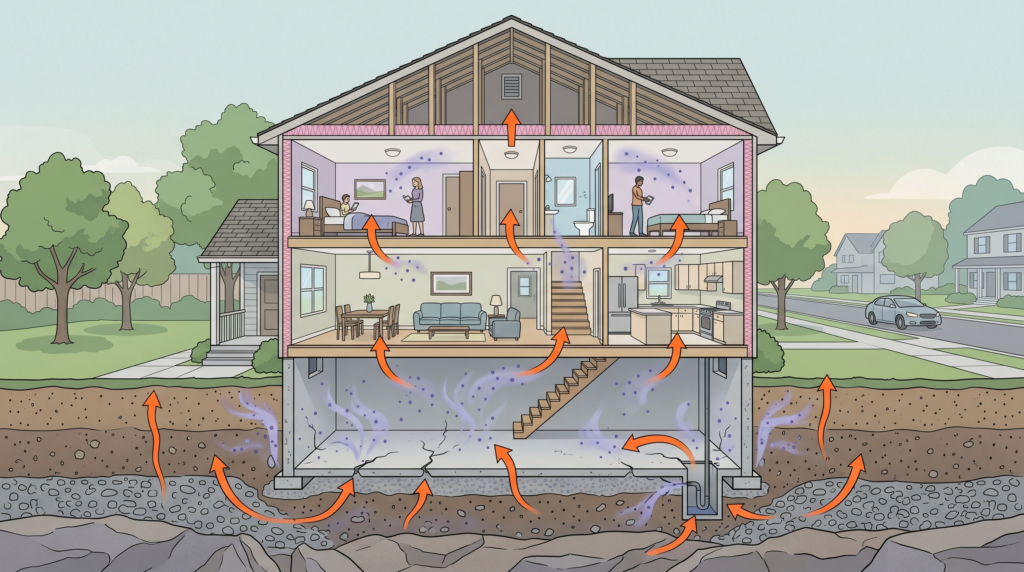
Radon is a naturally occurring radioactive gas produced by the decay of uranium in soil and rock. It enters homes through foundation cracks, construction joints, and gaps around service pipes. The U.S. Environmental Protection Agency (EPA) has identified the acceptable radon threshold at 4 picocuries per liter (pCi/L). Above that level, mitigation is recommended.
According to the Maryland Department of the Environment, approximately one in five Maryland homes tests above the EPA action level. Counties with particularly elevated radon profiles include Frederick County, Carroll County, Washington County, and parts of Baltimore County. Even in lower-risk counties, testing is the only way to know a specific property’s radon level.
Alhumd Inspections uses the 1028 XP — the most advanced continuous radon monitor commercially available — which provides hour-by-hour readings over a 48-hour test period rather than a single snapshot. This granularity matters because radon levels fluctuate, and a 48-hour continuous monitor gives a far more reliable average than an older passive charcoal canister test.
Radon mitigation systems, when needed, typically cost $800 to $1,500 in Maryland and are effective in reducing levels below the EPA threshold. This is worth negotiating with the seller when elevated radon is found during inspection.
9. When Is a Mold Inspection Needed in Maryland?
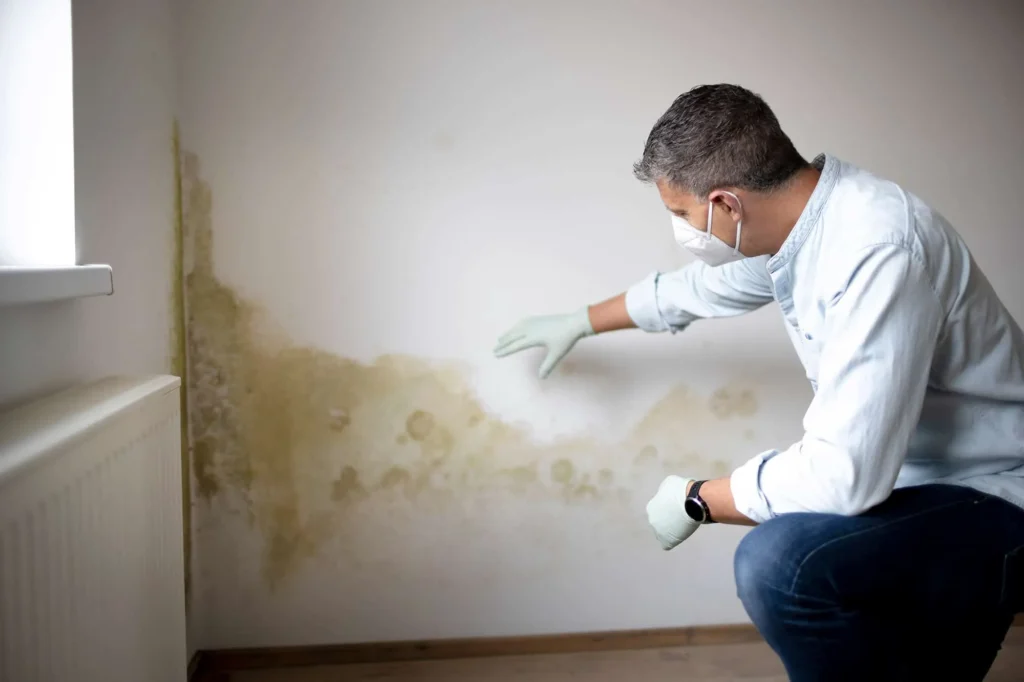
A mold inspection is warranted anytime there is visible discoloration on walls, ceilings, or in the basement, a musty odor anywhere in the home, a history of water intrusion or flooding, or visible evidence of past leaks around HVAC systems, water heaters, or in attic spaces.
Maryland’s climate — humid summers, moderate winters, proximity to the Chesapeake Bay and its tributaries — creates favorable conditions for mold growth in homes that have experienced moisture issues. Areas like Anne Arundel County, Prince George’s County, and coastal Eastern Shore properties have elevated rates of moisture-related issues in inspection findings.
Mold inspection at Alhumd Inspections uses infrared cameras and digital moisture meters to locate moisture behind walls before mold is visible at the surface. Air sampling and surface sampling are used where needed to identify mold type and concentration. This matters because the type of mold affects the remediation approach.
Not every discoloration is mold. Not every mold find is catastrophic. But an untreated mold problem in a crawl space or attic can cause structural damage and air quality issues that cost significantly more to remediate than a proactive inspection and early treatment would have.
10. What Is a Pre-Listing Inspection and Should Maryland Sellers Get One?
A pre-listing inspection is a home inspection ordered by the seller before putting the property on the market. In Maryland’s competitive real estate markets, it has become an increasingly common seller strategy, particularly in Baltimore County, Howard County, and Montgomery County.
The logic is straightforward. A seller who knows what an inspector will find can address issues proactively, price the property accurately, and avoid the renegotiation that often follows a buyer’s inspection report. Buyers who receive a pre-listing inspection report from the seller are also more confident in the condition of the property, which can translate to stronger offers with fewer contingencies.
The risk side is worth knowing: in Maryland, a pre-listing inspection report may need to be disclosed to buyers once it has been completed. Maryland’s disclosure requirements mean sellers cannot use the inspection to discover problems and then conceal them. Understanding this before ordering the inspection is important. Most Maryland real estate attorneys recommend it as a net positive for sellers who intend to make repairs or price accordingly, and as a risk for sellers hoping to hide issues.
11. What Is an 11-Month Warranty Inspection?
An 11-month warranty inspection is a specialized inspection for buyers of newly constructed homes in Maryland, conducted before the builder’s one-year warranty expires.
New construction in Maryland carries a statutory warranty under the Maryland New Home Warranty Security Act. Builders must warrant their work against defects for varying periods, with the one-year general workmanship warranty being the broadest coverage window.
The problem is that many buyers assume new construction means no issues. In practice, newly constructed homes in Maryland communities like Clarksburg, Odenton, Hanover, and Ellicott City regularly present with improperly completed grading, HVAC installation issues, insulation gaps, and sometimes structural framing deficiencies that only become apparent after the first year of settling and seasonal expansion and contraction.
An 11-month inspection conducted around month 10 to 11 gives buyers documentation of any deficiencies while the builder’s warranty still covers them. Without this inspection, warranty claims on legitimate defects are often dismissed by builders because no formal documentation exists.
12. What Is the Difference Between a Home Inspection and a Home Appraisal in Maryland?
This is one of the most common points of confusion for first-time Maryland home buyers.
A home appraisal is ordered by the mortgage lender to determine the market value of the property. The appraiser’s client is the bank, not the buyer. The appraisal protects the lender’s investment by confirming the property is worth at least what the bank is lending against it. An appraiser is not evaluating condition beyond what is visible and what affects value.
A home inspection is ordered by the buyer to evaluate the condition of the property. The inspector’s client is the buyer. The inspection protects the buyer’s investment by identifying defects, safety concerns, and maintenance issues regardless of their impact on market value.
Both are needed. They serve different purposes for different stakeholders. A property can appraise at full value and have significant undisclosed defects. A property can have extensive condition issues and still appraise at market rate because the local comparable sales are priced to account for the condition of older housing stock in the area.
In Maryland, buyers typically receive the inspection report before the appraisal is completed. This sequencing allows buyers to negotiate repair credits or price adjustments that may then factor into how the transaction price compares to the appraised value.
13. How Do You Choose the Right Home Inspector in Maryland?
Choosing a home inspector in Maryland comes down to five factors that separate thorough professionals from inspectors who treat it as a volume business.
License verification first. Confirm the inspector holds an active Maryland home inspector license. This is non-negotiable and verifiable in under two minutes at the Maryland Department of Labor website.
Certifications beyond the minimum. Membership in ASHI (American Society of Home Inspectors) or InterNACHI (International Association of Certified Home Inspectors) indicates ongoing education commitments. These bodies require continuing education for membership maintenance.
Technology in use. Inspectors using thermal imaging cameras and drones are providing a materially different quality of inspection than those relying on visual observation alone. Thermal cameras identify moisture behind walls and electrical hot spots. Drones provide rooftop detail without the safety limitations and access constraints of a ladder-only approach.
Same-day report delivery. The Maryland real estate market moves fast. An inspector who delivers reports two to three days later creates friction in a transaction where inspection contingency windows are often five to seven days. Same-day digital report delivery is the current professional standard.
Reviews that describe specifics, not just satisfaction. When reading reviews, look for clients who describe what the inspector found, how they communicated it, and whether the report was useful in negotiation. Generic “great experience” reviews tell you less than a review that describes the inspector catching a hidden foundation crack in a Towson colonial that the previous inspector had missed.
Alhumd Inspections has completed over 2,000 inspections across Maryland and Washington D.C., serves the full state including Baltimore, Columbia, Ellicott City, Annapolis, Rockville, Gaithersburg, Frederick, Silver Spring, Bethesda, Towson, Germantown, Bowie, Glen Burnie, Hagerstown, and Salisbury, and delivers same-day digital reports with thermal imaging and drone rooftop coverage as standard. Schedule online at alhumdinspections.com or call (667) 686-7281. Use promo code SELFSCHEDULE for a $20 discount when booking online.
CONCLUSION
Home inspection in Maryland is not a formality. It’s the last clear window you have before a purchase becomes final, and what happens in that window shapes everything from your negotiating position to your first year of ownership costs.
The 13 questions above cover the real decisions Maryland buyers, sellers, and property owners face, from understanding what’s actually inspected to knowing when radon testing isn’t optional, to choosing between a standard inspection and the Platinum Package for older homes. The answers are not the same for a 1930s Baltimore rowhome as they are for a 2019 construction in Clarksburg, and that’s exactly why working with an inspector who knows Maryland’s specific housing stock matters as much as working with one who is technically qualified.
Alhumd Inspections serves buyers and sellers across Maryland and Washington D.C. with licensed, experienced inspectors, thermal imaging and drone technology, and same-day digital reports. Schedule your home inspection in Maryland today at alhumdinspections.com or call (667) 686-7281.
A good inspection doesn’t just find problems. It gives you the confidence to move forward, or the information to walk away.
FAQ SECTION
What does a home inspection in Maryland cost in 2026? Home inspections in Maryland start at $395 for a standard single-family home with Alhumd Inspections. The final price depends on property size, age, and services included. Adding radon, mold, and termite inspections individually costs more, but the Platinum Package bundles all four services at a $50 discount. Verify current pricing at alhumdinspections.com. Use promo code SELFSCHEDULE for an additional $20 off when booking online.
Is a home inspection required by law in Maryland? No, Maryland law does not require a home inspection for a real estate transaction. However, most Maryland real estate contracts include an inspection contingency that gives buyers the right to negotiate or withdraw based on findings. Skipping an inspection to strengthen an offer exposes buyers to undisclosed defects with no legal recourse after closing.
How long does a home inspection take in Maryland? Most Maryland home inspections take two to four hours depending on property size, age, and the services requested. A standard three-bedroom home typically takes two and a half to three hours. Adding thermal imaging, radon testing, and mold sampling extends the timeline. An inspection completed in under 90 minutes for a standard home should be questioned.
Do Maryland home inspectors need to be licensed? Yes. Maryland requires home inspectors to hold an active license issued by the Maryland Department of Labor. Licensing requires completion of a 72-hour training course, passing the National Home Inspector Examination, and carrying liability and errors and omissions insurance. You can verify any Maryland inspector’s license at the Department of Labor’s online lookup portal.
What is radon and should I test for it in Maryland? Radon is a radioactive gas that enters homes through foundation cracks and soil gaps. The EPA’s action level is 4 picocuries per liter. Maryland has elevated radon risk, with approximately one in five homes testing above the action level according to the Maryland Department of the Environment. Frederick, Carroll, Washington, and Baltimore counties have particularly elevated profiles. Radon testing is strongly recommended for any Maryland home purchase.
What is included in an 11-month warranty inspection in Maryland? An 11-month warranty inspection covers the same structural, mechanical, and interior systems as a standard home inspection, conducted on a newly built home before the builder’s one-year workmanship warranty expires. It documents any defects while the warranty still covers them. New Maryland communities in Clarksburg, Odenton, Hanover, and Ellicott City regularly produce 11-month warranty inspection findings that builders remedy under warranty when properly documented.
What is the difference between a home inspection and an appraisal in Maryland? A home inspection evaluates condition for the buyer. An appraisal establishes market value for the lender. They are separate services ordered by different parties for different purposes. A property can appraise at full market value and have significant undisclosed defects that only an inspection reveals. Both are needed in a Maryland purchase transaction.
Should I be present during my home inspection in Maryland? Yes. Being present allows the inspector to walk you through findings in real time, which provides context that a written report cannot fully convey. Maryland buyers who attend their inspection are better positioned to evaluate the severity of findings, make informed repair requests, and negotiate effectively. If attending is not possible, the Alhumd Inspections report includes high-resolution photos and detailed descriptions.
What is a pre-listing inspection in Maryland? A pre-listing inspection is ordered by the seller before listing the property. It identifies issues the buyer’s inspector is likely to find, allowing the seller to make repairs, price accurately, or disclose proactively. In Maryland, a completed pre-listing inspection report may need to be disclosed to buyers, so sellers should understand the disclosure implications before ordering one.
How do I verify a home inspector’s license in Maryland? Go to the Maryland Department of Labor’s license search portal and search by name or license number. Verify the license is active, not expired or suspended. Any reputable Maryland home inspector will provide their license number proactively. Alhumd Inspections operates under a current Maryland home inspector license and InterNACHI and ASHI certifications.