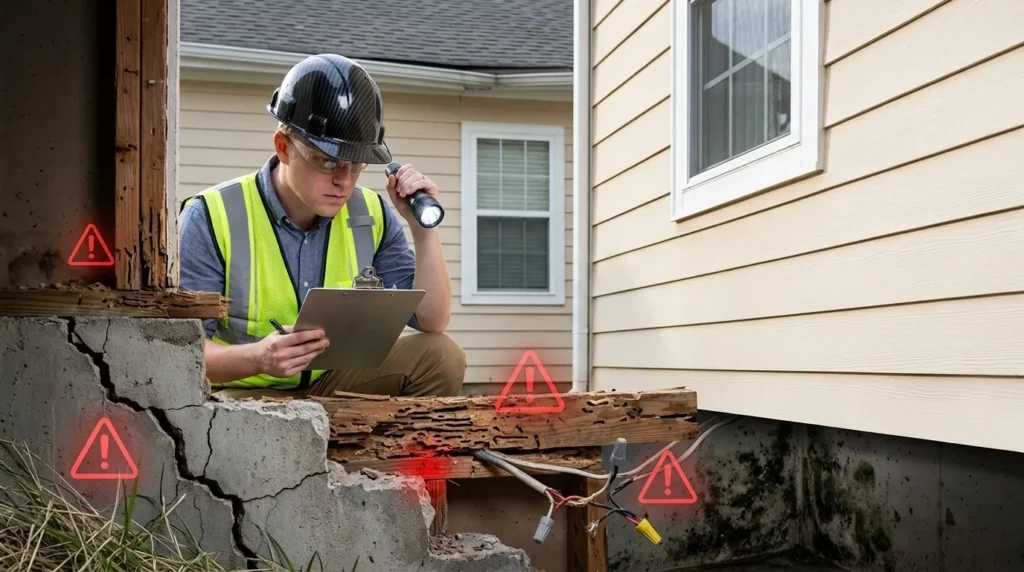

You found a house. Your offer was accepted. Now your agent says you have ten days to get your inspection done. The problem is that most buyers have never hired an inspector before, most agents hand them a name without much explanation, and the difference between a thorough inspector and a rushed one can mean missing a $15,000 foundation problem or a roof that’s two years away from failing.
Getting this right matters. Knowing how to hire a home inspector — a good one, not just whoever’s available — is the difference between walking into closing with a clear picture and inheriting someone else’s headaches. Here’s exactly what to look for, what to ask, and what a proper inspection in Maryland actually costs.
What Does a Home Inspector Actually Do?
A home inspector walks through a property and evaluates everything that’s visible and accessible — then puts it all in a written report. It’s not a code compliance review, and it’s not a guarantee that nothing’s wrong. What it is, when done right, is the most complete look at a property’s condition that you can get before you sign anything.
A standard inspection covers the structure (foundation, framing, roof), the major systems (electrical, plumbing, HVAC, insulation), and the interior (windows, doors, ceilings, walls, floors). The attic, crawlspace, garage, and exterior drainage are typically included too, depending on the property.
What’s not included by default: mold, radon, termites, pools, and sewer lines. Those need separate inspections. Most buyers don’t realize this until after the fact, so it’s worth knowing upfront.
How to Hire a Home Inspector: Step by Step
This isn’t complicated, but there’s a right way to go about it.
Step 1: Don’t Wait Until Your Offer Is Accepted
Most buyers start looking for an inspector after their offer goes through. That leaves them scrambling under a deadline, which usually means accepting whoever’s available rather than whoever’s actually good. If you’re actively house hunting, start putting together a short list now. Read reviews, check credentials, have a couple of options ready so you’re not making a rushed decision at the worst possible time.
Step 2: Check Their License and Credentials
In Maryland, home inspectors are required to hold a state license through the Maryland Department of Labor. That means they’ve passed a state exam, carry errors and omissions insurance, and keep up with continuing education. Before booking anyone, ask for their license number and verify it through the Department of Labor’s online lookup.
Beyond the state license, look for membership in a recognized professional organization. The American Society of Home Inspectors (ASHI) and the International Association of Certified Home Inspectors (InterNACHI) both have real entry requirements — exams, ongoing education, codes of ethics. An inspector with a Maryland license and an ASHI or InterNACHI certification is someone who takes the work seriously.
Step 3: Read the Reviews Carefully
Star ratings matter, but not as much as what people actually say. An inspector with 800 detailed five-star reviews is a very different story from one with 12 generic ones. Look for reviews that describe specific things — what the inspector caught, how clear the report was, whether the inspector took time to explain what they found, whether the buyer felt informed or just handed a stack of paperwork.
Watch for red flags: vague reports, problems that showed up after closing that the inspector missed, or short reviews that sound like they were written by someone who never actually met the inspector.
Step 4: Ask These Five Questions Before You Book
Don’t book without getting clear answers to these:
- How long have you been inspecting homes in this area?
- How long will this inspection take given the size of the property?
- Will you walk me through your findings on-site, or is everything in the report?
- Can I see a sample report?
- What’s included in the price and what costs extra?
A good inspector will answer these without hesitation. They’ve heard them before and they know a prepared buyer makes for a better inspection experience. If someone gets defensive or vague, that’s useful information.
Step 5: Show Up for the Inspection
Don’t skip this. Buyers who only read the report afterward consistently say they wish they’d been there. Being on-site means you can ask questions as things come up, see exactly what the inspector is pointing to, and understand how serious a finding actually is instead of trying to decode report language from your kitchen table.
A standard single-family home takes two to three hours. Older homes, larger properties, or anything with a pool, crawlspace, or detached outbuilding will take longer. If an inspector tells you they’ll be done in 90 minutes on a 2,500 square foot house, that’s worth questioning.
Step 6: Read the Full Report Before Your Contingency Window Closes
A good company delivers the report the same day. Alhumd Inspections, which has completed over 2,000 inspections across Maryland, sends same-day digital reports with photos and plain-language explanations — and that’s what you should expect from any inspector you hire. Reports that show up three or four days later eat into your negotiation window for no good reason.
When the report arrives, read all of it. Not just the summary. The summary covers the major stuff, but smaller items can add up to a real deferred maintenance picture that matters when you’re deciding what to ask the seller to fix.
How Much Does It Cost to Hire a Home Inspector in Maryland?
For a standard single-family home in Maryland, expect to pay somewhere between $350 and $600. That range comes from the American Society of Home Inspectors 2025 fee survey and reflects differences in property size, age, and location.
A few things push the price higher. Homes over 3,000 square feet typically add $50 to $100 to the base price. Older homes, especially pre-1980 construction with older wiring or plumbing, take more time. Add-ons include radon testing ($100 to $150), termite inspection ($75 to $125), mold testing ($200 to $400 depending on how many samples are needed), and pool inspection ($75 to $150).
If you’re adding multiple services, ask about bundled pricing. A combined inspection package covering the standard inspection plus radon, termite, and mold from one company usually runs $700 to $900, and coordinating everything through one provider is much easier than scheduling three separate vendors. Alhumd Inspections offers bundled services across Howard, Montgomery, Baltimore, and Frederick counties. Current pricing is on their scheduling page at alhumdinspections.com/scheduling.
Always confirm pricing before you book — rates change.
One more thing worth saying: don’t go with the cheapest option just because it’s cheap. The difference between a $275 inspector and a $450 one disappears completely if the lower-priced one misses something that costs you $20,000 after closing. The inspection fee is the smallest number in this transaction.
What Makes a Good Home Inspector Different From an Average One
You can’t always tell from a website. Here’s what actually separates thorough inspectors from ones who are moving too fast to catch everything.
They Use More Than a Flashlight
The baseline is a flashlight and a ladder. The better inspectors bring thermal imaging cameras that can spot moisture behind walls, insulation problems, and electrical hot spots you’d never see with a visual check. Moisture meters confirm whether that suspicious-looking stain is an active problem or an old one. Drone inspection for roofs lets them document damage on surfaces that aren’t safe to walk.
Alhumd Inspections uses thermal imaging and drone technology as part of their inspections, which puts them in a different category from companies doing purely visual checks.
Their Reports Actually Explain Things
A report that says “evidence of water staining, further evaluation recommended” with no photo and no context isn’t doing its job. A good report tells you what was found, where it is, why it matters, and what to do about it. Written clearly enough that you don’t need a construction background to understand it.
Before you book, ask to see a sample report. Any inspector worth hiring will share one without making it a big deal. If someone’s reluctant, that’s a sign.
They Take Their Time
There’s a difference between a thorough inspector and one trying to get through as many houses as possible in a day. Crawlspace entry, attic access, checking every outlet, running every faucet, opening every window — all of that takes time. A proper inspection of a mid-sized Maryland home takes two and a half to three hours. Someone quoting under two hours for a large property is cutting corners somewhere.
When Your Agent Recommends an Inspector
Your agent will probably suggest someone. That’s not automatically a problem, but it’s worth understanding the dynamic. Agents who refer the same inspectors regularly build a working relationship with them. Usually that just means they know the person does good work. Occasionally it means there’s a softer-than-ideal relationship where the inspector knows not to rock the boat on a deal.
This doesn’t mean the referral is bad. It means you should verify the person independently using the steps above, and compare them to one or two names you found on your own. In Maryland, you have every right to choose your own inspector regardless of what your agent suggests.
Other Inspections Worth Adding Before Closing
The standard home inspection is the foundation. Depending on the property, a few add-ons are worth taking seriously.
Radon testing is worth doing on any Maryland property. Most of the state falls in EPA Radon Zone 1 or Zone 2, meaning elevated radon risk. Radon is invisible, odorless, and the second leading cause of lung cancer in the US according to the EPA. Testing costs $100 to $150, and if levels come back above 4 pCi/L you can ask the seller to address it before closing. Finding out afterward is a much less pleasant experience.
Termite inspection is required by most Maryland lenders for FHA and VA loans, and advisable regardless. Maryland’s climate is hospitable to termites, and the damage they cause isn’t covered by homeowner’s insurance.
Mold testing makes sense for any property with visible staining, a musty smell, or any known water history. A visual inspection combined with air sampling gives you a clear picture.
Pool inspection is standard if the home has one. It covers structure, equipment, electrical, and safety compliance.
Before You Book: A Quick Checklist
Before committing to any inspector, run through this:
- Maryland state license verified
- ASHI or InterNACHI certification confirmed
- Errors and omissions insurance in place
- At least a few hundred completed inspections
- Sample report reviewed and makes sense to a non-expert
- Quoted inspection time is appropriate for the property
- You’re planning to attend in person
- Report delivery is same day or next day
- Add-on services confirmed and scoped
- Price confirmed in writing
Choosing Your Inspector
This isn’t a decision to make in five minutes while you’re riding the high of an accepted offer. It’s the decision that determines how much you actually know about what you’re buying.
Alhumd Inspections works with buyers, sellers, and homeowners across Maryland, covering Howard, Montgomery, Baltimore, Frederick, and surrounding counties. They’ve completed over 2,000 inspections, carry 800-plus verified Google reviews, use thermal imaging and drone technology, and deliver same-day reports. New clients get $20 off when scheduling online with promo code SELFSCHEDULE.
To book or get pricing for your specific property, head to alhumdinspections.com/scheduling or call (667) 686-7281.
The right inspector doesn’t just hand you a report. They make sure you actually understand what you’re walking into.
Pricing in this article reflects current market ranges and is subject to change. Confirm fees directly with any inspection company before booking.
FAQs
Q1: How do I start looking for a home inspector? Start by verifying credentials — any inspector you consider should hold a valid Maryland state license, carry errors and omissions insurance, and belong to ASHI or InterNACHI. Check their reviews for specific detail, not just star ratings. Ask to see a sample report before you commit. Don’t just take whoever your agent recommends without looking them up yourself first.
Q2: How much does a home inspection cost in Maryland? Most standard home inspections in Maryland run $350 to $600, based on the 2025 ASHI fee survey. Add-ons push the total higher: radon testing adds $100 to $150, termite inspection adds $75 to $125, mold testing adds $200 to $400, and pool inspection adds $75 to $150. Bundled packages covering multiple services typically run $700 to $900. Confirm current pricing directly with any company before booking.
Q3: How long does a home inspection take? Plan on two to three hours for a typical single-family home. Larger properties, older construction, and homes with pools, crawlspaces, or detached buildings take longer. If an inspector tells you they’ll be done in 90 minutes on a standard-sized house, that’s a red flag — it usually means they’re moving too fast to be thorough.
Q4: Should I be there for the inspection? Yes, always. Being there in person lets you ask questions as things come up, see what the inspector is actually pointing to, and understand how serious something is in real time. Buyers who only read the report afterward consistently feel less confident about what they bought. Don’t skip it.
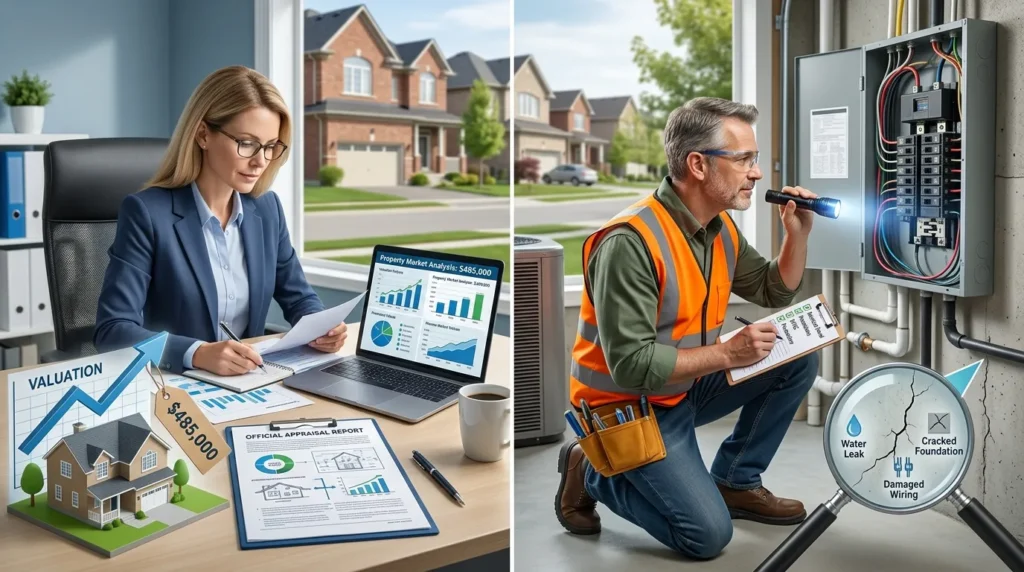
Q5: What’s the difference between a home inspection and an appraisal? A home inspection looks at the physical condition of the property and is ordered by the buyer. An appraisal estimates what the property is worth and is ordered by the lender. They serve completely different purposes, and one doesn’t replace the other.
Q6: Can a home inspector miss things? Yes. Inspectors can only evaluate what’s visible and accessible — they can’t see inside walls or under finished floors. That’s why the good ones use thermal imaging and moisture meters to catch things that aren’t immediately visible. No inspection guarantees that nothing’s wrong, but a thorough inspector with the right tools will catch the significant stuff.
Q7: What makes a good home inspector different from an average one? Four things: credentials, tools, time, and report quality. A good inspector holds a state license and a professional certification, uses thermal imaging and other diagnostic tools, spends the right amount of time on the property, and delivers a report that’s specific and easy to understand. Fast, cheap inspections with vague reports aren’t good inspections no matter what they cost.
Q8: Do I need an inspection on a new construction home? Yes. New builds have problems too — framing errors, systems installed incorrectly, things that slipped through the builder’s process. A pre-drywall inspection during construction and a final inspection before closing are both worth having. Alhumd Inspections offers pre-drywall inspection for new construction across Maryland.
Q9: What should I do once I get the report? Read the whole thing, not just the summary. Identify what needs immediate attention versus what’s normal deferred maintenance. Work with your agent on what to ask the seller to address. For anything significant, get contractor estimates before closing so you know the actual cost going in, not after you own it.
Q10: Is radon testing worth adding in Maryland? Yes. Most of Maryland sits in EPA Radon Zone 1 or Zone 2, meaning elevated risk. Radon is the second leading cause of lung cancer in the US, and you can’t detect it without testing. At $100 to $150, it’s one of the lowest-cost add-ons with some of the highest stakes. If levels come back high, you can negotiate mitigation with the seller before closing.