Written by the Alhumd Inspections team. Reviewed by Ahmed Hassan, Maryland Licensed Home Inspector #34028 (InterNACHI-certified).
Quick answer: Yes, and most Maryland buyers who inspect a new build book more than one. The county inspections during construction check minimum building code, the county inspector works for the county, and much of that checking happens before the power and water are even on, so nothing gets tested. A private inspection by a Maryland-licensed home inspector is the only check of the finished home done for you: a pre-drywall inspection while the framing, wiring and plumbing are still visible, a final inspection before settlement, and an 11-month warranty inspection before the builder’s first-year warranty expires.
| Inspection | When | What it protects |
|---|---|---|
| Pre-drywall | After framing and rough plumbing, electrical and HVAC, before insulation and drywall | Everything that is about to be sealed inside your walls for the life of the home |
| Final (pre-settlement) | Home complete, before your builder walkthrough | Your punch list: defects the builder fixes at the builder’s cost before you own them |
| 11-month | Month 10 or 11 after you move in | Your warranty claim: a dated, photographed defect list filed before the one-year deadline |
“But the county already inspected it” – what that inspection actually is
This is the sentence that costs new-home buyers the most money in Maryland, because a municipal inspection and a home inspection share a name and almost nothing else.
- Time. A county inspector may visit 20 or more homes in a day, which leaves under half an hour per site. A private inspector spends two to three hours on your home alone.
- Nothing is switched on. Many municipal stage inspections happen before the power and other utilities are connected. The county does not test your outlets, run your appliances, operate your HVAC system or fill your water heater. A system that has never been run cannot have been checked.
- Code is a floor, not a finish. A county inspector can cite a builder for improper structural framing or a non-complying drain connection. A poorly fitted door, unprofessional wiring runs, an uneven tile countertop, shoddy finish work and grading that sends rainwater at your foundation are not on that list. They are on ours.
- Attics and crawl spaces. Municipal inspectors rarely enter them. Your inspector does, and the attic is where missing insulation and roof leaks show themselves first.
- Whose side. The county’s findings go to the builder and the county. A licensed home inspector’s report belongs to you, and under a Maryland purchase contract, only an inspection performed by a Maryland-licensed home inspector is valid for your inspection contingency.
The county checks that the home is legal to sell. Your inspector checks whether it is right to buy, and documents what is not.
Who needs a new-construction inspection the most
Every buyer benefits, but four groups carry the most risk without one:
- Buyers who waived their inspection contingency to win the contract. Waiving the contingency removes your right to walk away, not your right to know. A pre-settlement and 11-month inspection still get defects fixed on the builder’s warranty instead of your card.
- First-time buyers. You have no older home’s worth of experience in what a water stain, a sticking door or a cold room is telling you. The inspection report teaches you your own house.
- Buyers moving from out of state or overseas who cannot visit the site during the build. The pre-drywall window is days long. If nobody is watching for you, it closes unwatched.
- Buyers of a spec or inventory home that was already finished when you found it. The pre-drywall stage is gone forever, which makes the final inspection and the 11-month inspection the only two checks the home will ever get.
Inspection 1: pre-drywall, the one stage that can never be repeated
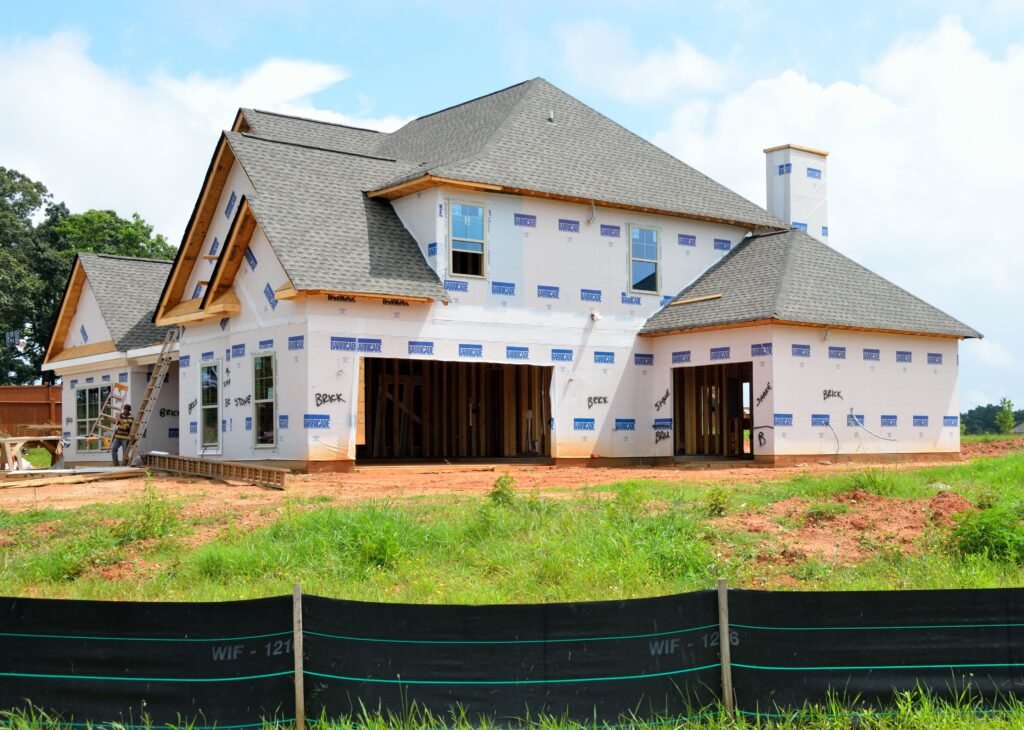
The pre-drywall inspection happens after framing and the rough plumbing, electrical and HVAC runs are in, and before insulation and drywall cover them. It is the only moment in the home’s life when its skeleton is visible, and our pre-drywall inspection checklist covers it in full. In brief, your inspector is looking at:
- Framing: stud spacing and alignment, load paths, and cut, notched or damaged trusses and joists, which lose strength exactly where a plumber’s drill went through
- Fasteners and connectors: missing nails, overdriven fasteners and missing hurricane ties or straps
- Window and door flashing: the tapes and membranes that decide whether wind-driven rain gets into the wall
- Plumbing runs: supply and waste lines, slope on drains, nail plates where pipes pass through studs
- Electrical runs: wiring runs, box placement, and cable protection
- HVAC: duct runs, connections and support before they are buried
- Fire blocking and draft stopping in the stud cavities
A defect found here costs the builder an hour. The same defect found after drywall costs someone a demolished wall, and if the warranty window has closed, that someone is you.
Inspection 2: the final inspection, system by system
The final inspection is a full home inspection of the finished house, done before settlement and before your builder walkthrough, so its findings become the builder’s punch list. System by system, it covers:
- Exterior and site: foundation, siding, patios, driveway, garage, porches, and grading and drainage, the slope of the ground that decides where rain goes
- Roofing: shingles, gutters, downspouts, flashing, roof vents, chimneys and flues
- Attic: insulation depth and coverage, ventilation, and the underside of the roof deck, where leaks announce themselves
- Electrical: service capacity, panels, interior wiring, and every switch, outlet and GFCI, tested, now that the power is on
- Plumbing: supply lines, interior piping, water pressure, drains, fixtures and the water heater, including reversed hot and cold connections, which happen more often than builders admit
- Heating and cooling: the furnace or heat pump and the air conditioner, actually operated, with distribution pipes, ducts, radiators, thermostats, filters and condensate lines
- Interior: walls, floors, ceilings, stairs, bathrooms, and every window and door for operation
- Kitchen: appliances, cabinets, exhaust fan and floor covering
Inspection 3: the 11-month inspection, timed to your warranty
A home’s first year is its shakedown cruise. Lumber dries and shrinks, soil settles, and the defects that were invisible in a new house show up as nail pops, sticking doors, hairline cracks, slow leaks and rooms that never heat evenly. The 11-month warranty inspection is a full inspection done in month 10 or 11, and its product is a dated, photographed defect list you send the builder in writing before the one-year workmanship warranty expires. Maryland agents who work new construction give the same advice: keep a written list of everything that comes up in the first year, and send it to the builder in writing. An inspector’s report is that list, done properly.
What inspectors actually find in brand-new homes
These findings come up on new builds again and again, including homes from large, reputable builders:
| Defect | Usually found at | Why it matters |
|---|---|---|
| Leaking plumbing supply and waste lines | Final, 11-month | Slow leaks rot subfloors and feed mould long before they stain a ceiling |
| Missing GFCI outlets in required locations | Final | A safety defect in kitchens, bathrooms and garages |
| Non-functional HVAC systems | Final | Systems installed but never properly started up or charged |
| Windows broken or not operating | Pre-drywall, final | Failed seals and hardware are warranty items now, your cost later |
| Cut or damaged trusses | Pre-drywall | Structural strength lost where other trades made room for pipes and ducts |
| Drains clogged with construction debris | Final | Drywall compound and offcuts washed into the lines during the build |
| Leaking condensation from the furnace or air handler | Final, 11-month | A disconnected condensate line drips into the ceiling or closet below |
| Reversed connections at the water heater | Final | Scalding risk and a sign the plumbing was never tested |
| Missing insulation in the attic | Pre-drywall, final | Cold rooms and high bills, invisible from the living space |
| Water damage in the attic and basement | Final, 11-month | Roof or flashing leaks, and grading that sends water at the foundation |
None of this means the builder is careless. A house has dozens of trades and hundreds of components, and no one’s job, except your inspector’s, is to check the whole finished product from your side of the contract.
Maryland’s new-home warranty law, and how inspections make it work
Maryland’s new home warranty law is the Real Property Code, Title 10, Subtitle 6. What it gives you depends on whether your builder participates in a new home warranty security plan:
- If the builder is in a warranty plan, §10-604 sets the minimum coverage: 1 year for defects in materials and workmanship, 2 years for the electrical, plumbing, heating, cooling and ventilating systems (appliances and fixtures follow the manufacturer’s warranty), and 5 years for structural defects. Before you sign, §10-602 requires the builder to tell you in writing whether it participates in such a plan, and under §10-605 the contract must name the plan, with your signed warranty delivered within 60 days of settlement.
- If the builder is not in a plan, §10-603 requires a written disclosure that you acknowledge, and you then rely on Maryland’s implied warranties, which under §10-204 generally last one year, and two years for structural defects.
Either way, two habits protect you. First, check that your builder is registered with the Home Builder Registration Unit of the Attorney General’s Consumer Protection Division, as Maryland requires. Second, remember that a warranty only pays on defects that are documented inside its window. That is what the inspections are for: the final inspection documents the home before the warranty clock starts, and the 11-month inspection documents it before the first deadline passes.
Before you sign: the builder’s contract decides your access
Builders use their own purchase contracts, not the standard Maryland form, and the inspection clause is one of the lines that matters most. Some builders limit when an outside inspector may be on site, and the pre-drywall window can be a matter of days.
1. Ask whether private inspections are allowed, and at which stages.
2. Get the answer in writing, in the contract, not as a verbal promise from the sales office.
3. Give your inspector the expected drywall date as soon as you have it, so the pre-drywall visit is booked before the walls close.
If a builder will not allow a private inspection before closing at all, learn that before you sign, not after. You can still book a full inspection in the first weeks after settlement, while every warranty is live, and follow it with the 11-month inspection.
What a new-construction inspection costs in Maryland
Alhumd’s home inspections run from $350 to $600 depending on the size of the home, and phase inspections are priced by stage and size. For market context, a Baltimore-area inspector lists pre-drywall inspections from $450 and new construction inspections from $499 (checked October 2026). Our pricing guide breaks down how much a home inspection costs in Maryland in full. Most buyers also add a radon test at the final inspection: much of Central Maryland has high radon potential, the EPA action level is 4.0 pCi/L, and a new, tightly built home has never been tested. Set any of these numbers against one post-warranty repair, opening a wall to replace a crushed duct, re-grading a yard that drains at the house, and the inspection is the cheapest line in the purchase.
FAQs
Do I need an inspector for a new home?
Yes. The county inspects for code compliance at set stages, often before utilities are connected, and its inspector does not work for you. A private, Maryland-licensed inspector tests the finished systems, judges workmanship as well as code, and reports to you alone.
Is a home inspection required on new construction in Maryland?
No, Maryland law does not require one. But if your purchase contract has an inspection contingency, only an inspection by a Maryland-licensed home inspector is valid under it.
When should I schedule the pre-drywall inspection?
As soon as framing and the rough plumbing, electrical and HVAC are complete, and before insulation and drywall. Get the builder’s drywall date and book backwards from it. The window can be only a few days.
Can the builder refuse to let my inspector in?
During construction the builder controls site access, which is why the inspection policy belongs in your contract in writing before you sign. If pre-closing access is refused, inspect immediately after settlement and again at 11 months.
Will an inspection delay my settlement?
Rarely. A final inspection takes two to three hours, the report is written for the builder’s punch list, and builders handle punch-list repairs inside the normal pre-settlement process.
Is one inspection enough?
If you book only one, make it the final inspection before settlement. Add the pre-drywall if your contract allows it, because that stage can never be seen again, and the 11-month because it is timed to the warranty deadline.
What warranty does Maryland require on a new home?
If your builder participates in a warranty security plan, the legal minimums are 1 year on workmanship and materials, 2 years on the main systems and 5 years on structural defects. Without a plan, the builder must disclose that in writing, and Maryland’s implied warranties apply, generally one year, and two years for structural defects.
Book a new-construction inspection with Alhumd
Alhumd Inspections is a licensed, insured Maryland home inspection company. Your inspector is Ahmed Hassan, Maryland Home Inspector License #34028, InterNACHI-certified. We inspect new construction across Central Maryland, including Ellicott City, Columbia, Fulton, Laurel, Clarksville, Bethesda, Potomac and Baltimore, at the pre-drywall, pre-settlement and 11-month stages.
Call (667) 686-7281, or book online and save $20 with code SELFSCHEDULE.
Sources: Maryland Code, Real Property §10-602, §10-603, §10-604, §10-605 and §10-204 (new home warranties), Maryland General Assembly; Home Builder Registration Unit, Office of the Attorney General of Maryland; InterNACHI, new-construction and phase inspection guidance; market pricing, Precision Home Inspections (Baltimore area, checked October 2026).